
This article is not available in this language yet
We haven't translated this guide into your selected language yet, but you can read the full original article in English.
Read Article in EnglishPerguntas frequentes
What is an ube latte?
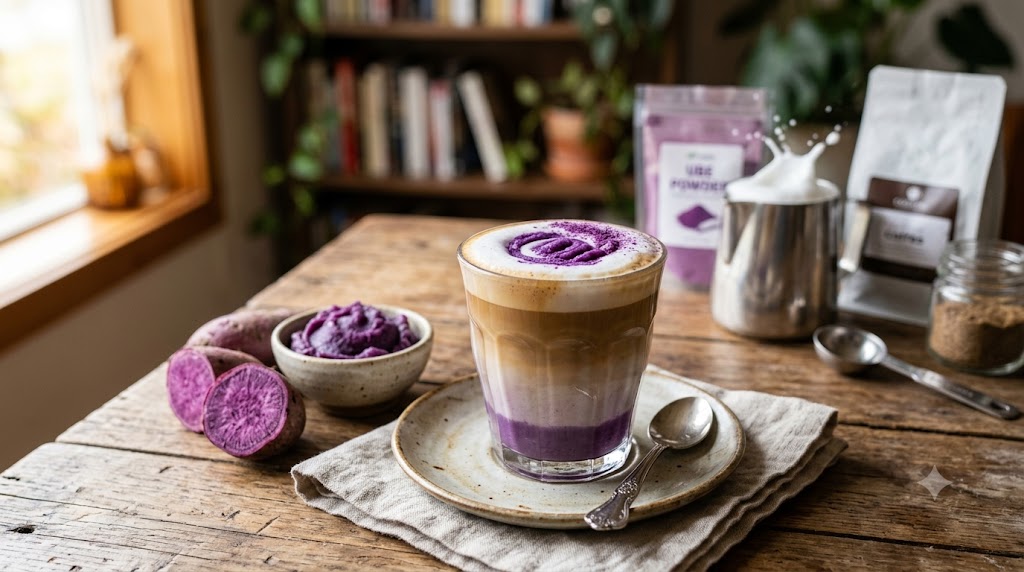
An ube latte is a coffee drink made with ube (Dioscorea alata, the Filipino purple yam), steamed or frothed milk, and usually espresso. The ube component can be ube extract, ube powder, ube syrup, or ube halaya. It is naturally purple and tastes mildly sweet with vanilla, hazelnut, and subtle earthy notes.
What does an ube latte taste like?
An ube latte tastes mildly sweet, creamy, and softly flavored with vanilla and nutty notes. The flavor is subtle rather than intense, making it work well alongside coffee. It is softer and more floral than a pistachio latte and less sharp than a vanilla latte.
How do you make an ube latte?
Dissolve ube powder or ube extract in a small amount of hot water. Mix with milk and sweetener of your choice. Add espresso shots over ice (for iced) or pour frothed hot milk over espresso (for hot). Vanilla extract and oat milk or coconut milk are the recommended additions for best flavor.
Does Starbucks have an ube latte?
Starbucks has offered ube-flavored drinks in limited markets, including an Iced Ube Coconut Macchiato in the Philippines and select U.S. test locations. The Starbucks version uses an ube syrup rather than real ube, so the flavor is more artificial vanilla-hazelnut. Availability varies by location.
Is an ube latte caffeinated?
Ube itself has zero caffeine. An ube latte becomes caffeinated only when espresso is added. Without espresso, it is a completely caffeine-free drink. A single-shot ube latte contains approximately 63mg of caffeine from the espresso.
What milk is best for an ube latte?
Oat milk (barista-style) froths well and complements ube's flavor without competing. Coconut milk is the best flavor pairing, reinforcing ube's natural coconut aroma. Whole dairy milk gives the richest texture. All options work, but oat and coconut are most recommended.
Can you make an ube latte without espresso?
Yes. An ube latte without espresso becomes a purple ube milk drink, which is caffeine-free and can be served hot or iced. It is delicious as a standalone non-coffee beverage, especially with coconut milk and a touch of honey.
What is the difference between an ube latte and a taro latte?
Ube lattes use naturally purple, sweet purple yam with vanilla-nutty flavor. Taro lattes use pale, starchy taro root with a mild earthy taste and artificial purple coloring in most commercial versions. Ube lattes taste sweeter and more dessert-forward. Taro lattes taste milder and starchier.
Where can I find an ube latte near me?
Filipino bakeries and coffee shops, Asian-American cafes, and specialty coffee shops in major cities often carry ube lattes. Starbucks has offered it in select test markets. Making it at home is the most reliable option and costs significantly less.
Is an ube latte healthy?
A standard homemade ube latte made with ube powder and oat milk has approximately 120 to 150 calories per cup. It contains natural anthocyanin antioxidants from the ube. Coffee shop versions with syrups and cream can be 400 calories or more. Made at home with real ube powder and minimal sweetener, it is a relatively light, nutritious drink.