Ube
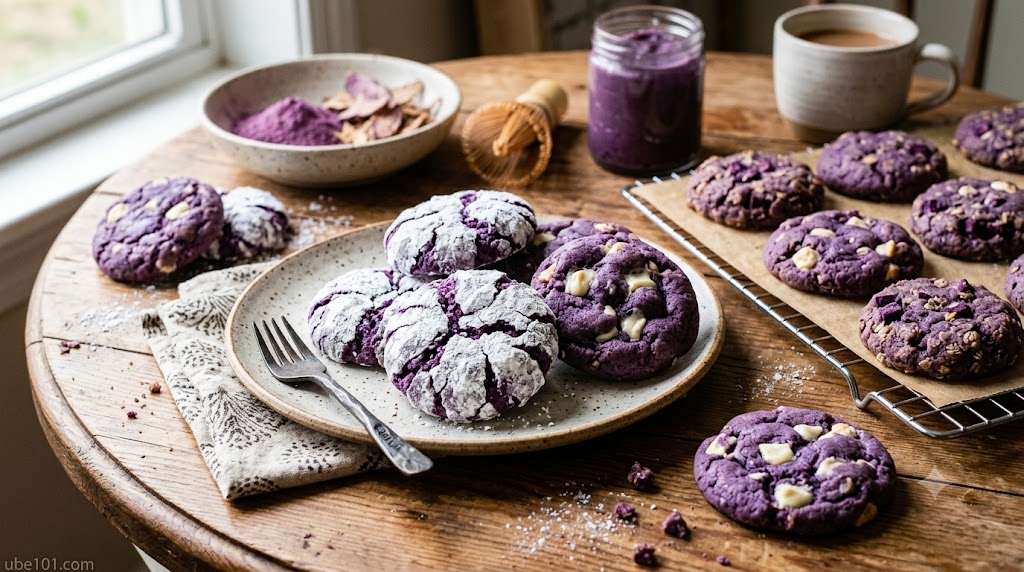
Read more Ube Cookies: Best Recipes and Variations
Discover the best ube cookies recipe with crinkle, vegan, and gluten-free variations. Real purple yam flavor, not just color.

Wir testen und bewerten jedes mit Ube zubereitete Essen, Dessert und Getränk. Finden Sie Zutaten, Rezeptfakten und erfahren Sie, was die Leute tatsächlich denken.
Wie wir jeden Ube-Geschmack testen und vergleichen.
Wir sammeln jede einzelne Ube-Marke und probieren sie, um echte Unterschiede zu identifizieren.
Wir beschäftigen uns intensiv mit den Etiketten und prüfen den authentischen Ube-Gehalt, den Zuckergehalt und die Qualität.
Wir gruppieren Bewertungen nach Kategorieprofilen, damit Sie wissen, welche Ube-Leckereien Sie überspringen und welche Sie suchen sollten.
Latest articles, guides, and deep dives from the Ube 101 team.
Discover the best ube cookies recipe with crinkle, vegan, and gluten-free variations. Real purple yam flavor, not just color.
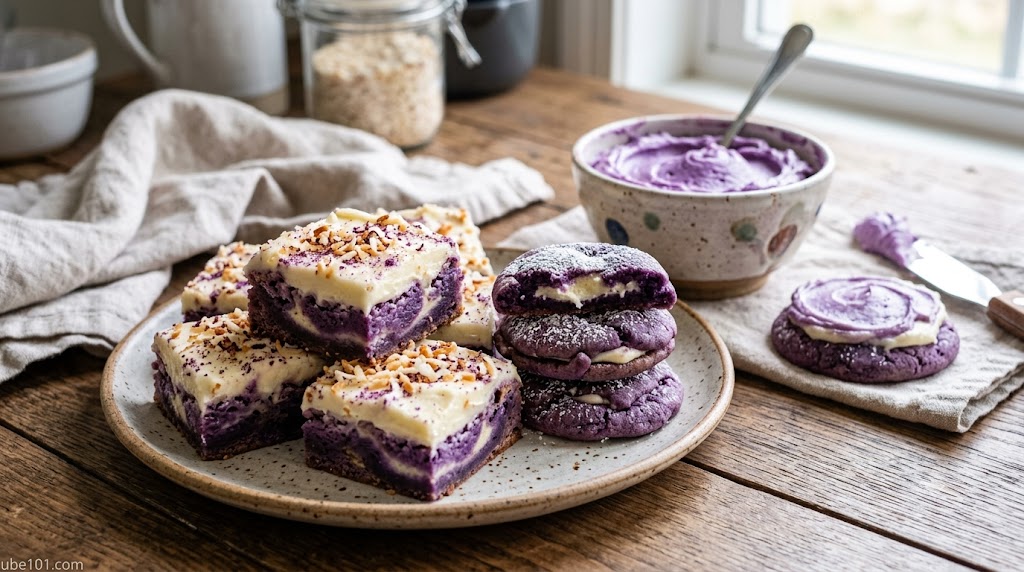
Ube and cream cheese are a perfect pairing. Get tested recipes for bars, stuffed cookies, frosting, spreads, and pastry fillings.
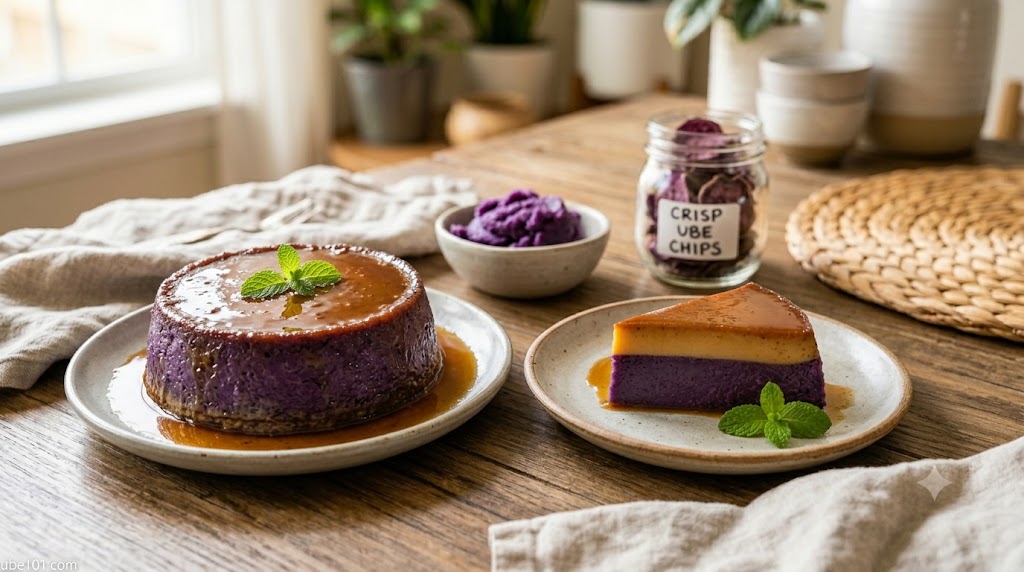
Learn to make ube flan and ube leche flan cake with a step-by-step recipe. Compare Red Ribbon's version and find it near you.
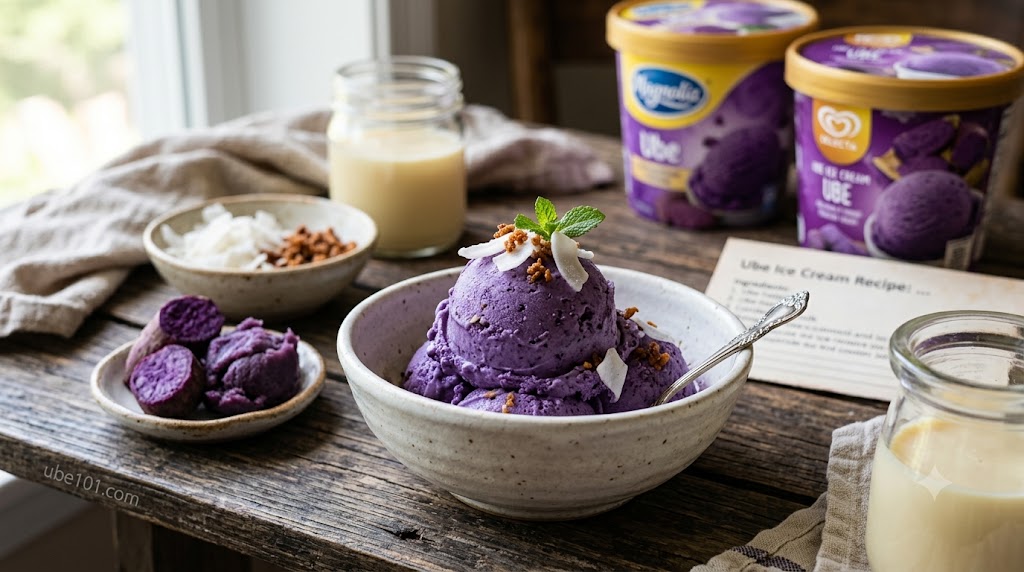
Discover the best ube ice cream brands, a simple no-churn recipe, and where to find it near you. Real purple yam flavor guide.
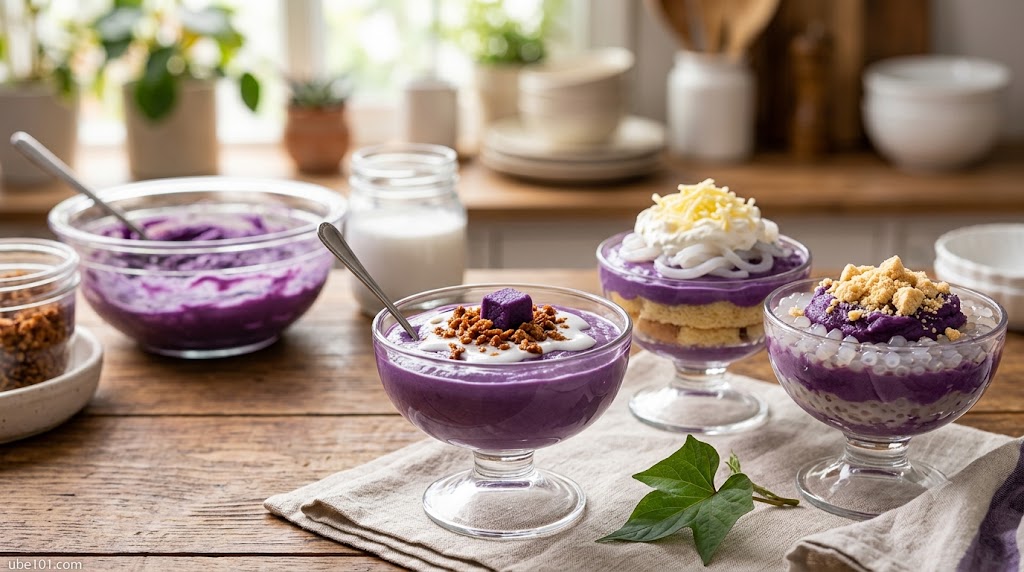
Make ube pudding with easy recipes for banana, chia, milky, and tapioca versions. Real purple yam flavor in every variation.
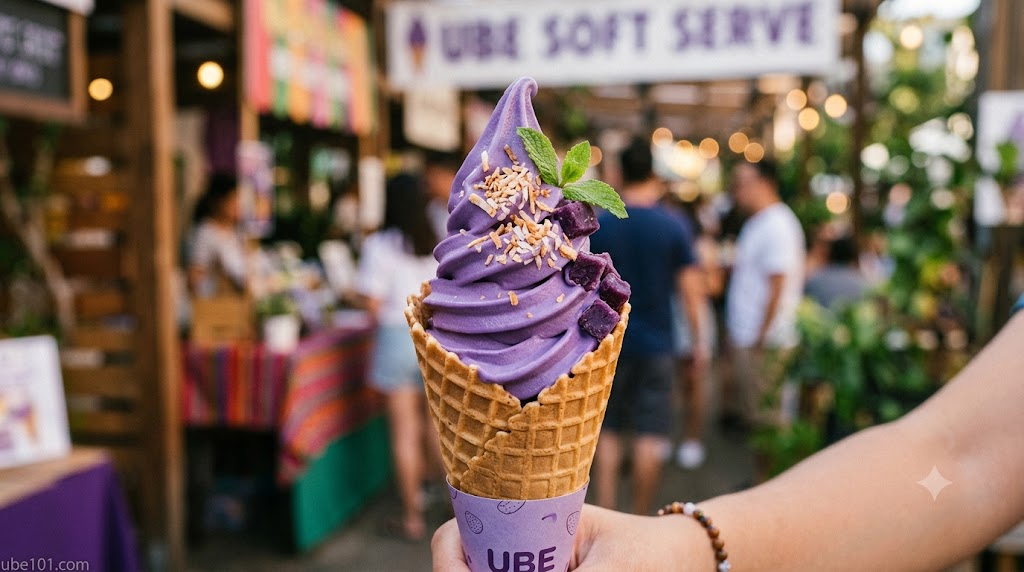
Find ube soft serve near you or make it at home. Covers top shops, commercial mixes, DIY methods, and dairy-free options.
Rechnen Sie Messungen um und ersetzen Sie Zutaten in Ihren Ube-Rezepten sofort.
Ube 101 is an independent food resource and guide that maps, tests, reviews, and ranks all delicious foods, desserts, treats, and drinks made with ube (Filipino purple yam).
We sample ube products side-by-side, verify their ingredient lists (checking for authentic ube content, sugar levels, and quality), and rank them based on taste, texture, and value.
No. We never accept sponsorships from food brands or manufacturers. All reviews, tastings, and rankings are completely independent and unbiased.
Ube (Dioscorea alata) is a true purple yam native to Southeast Asia with a sweet, vanilla-nutty flavor. Taro (Colocasia esculenta) is a starchy root with white-to-light-purple flesh and a mild, earthy taste.
No. Ube is a yam (Dioscorea), whereas purple sweet potatoes (Ipomoea batatas) belong to the morning glory family. Ube has a creamier texture and sweet, vanilla-like profile, while sweet potatoes are earthier and less sweet.
Ube is highly nutritious, rich in healthy carbohydrates, fiber, Vitamin C, potassium, and stable antioxidants called anthocyanins (which give it its purple color). It also has a relatively low glycemic index.