← Back to Reviews & Guides
Ube

Ube Boba: How to Make Purple Yam Bubble Tea

Make café style ube boba at home in 25 minutes. Real ube flavor, simple ingredients, and tips for taro versus ube done right.

Ube 101 Team ·
Ube Boba: How to Make Purple Yam Bubble Tea
Font Size:

A barista in San Francisco once told me she sells more ube drinks in July than any other single flavor, purple cups lined up on the counter like a parade. I asked why people love it so much, and she just shrugged and said it tastes like nothing else on the menu. That’s the whole appeal in one sentence. Ube boba doesn’t taste like grape candy or fake purple anything. It tastes like a real root vegetable turned into something creamy and a little sweet.

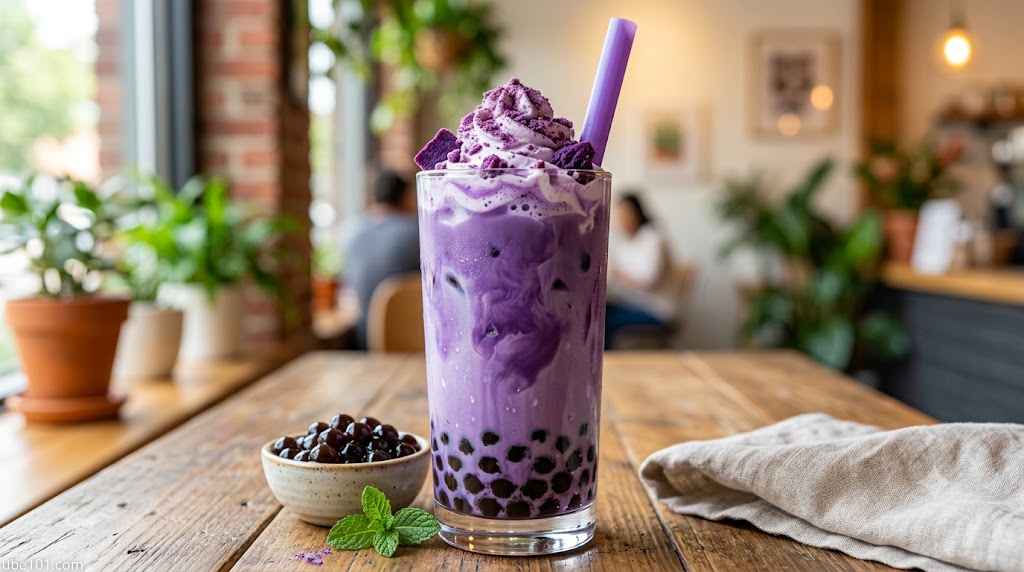
Ube boba is a milk tea drink made with purple yam, milk, and chewy tapioca pearls, and you can make a café quality version at home in about 25 minutes using ube powder or extract instead of fresh yam. The flavor comes across sweet, nutty, and lightly vanilla, with none of the artificial grape taste some purple drinks lean on.

What Ube Boba Actually Tastes Like

Ube on its own tastes gently earthy and only mildly sweet, closer to a mellow sweet potato than anything candy like. Mixed into milk tea, that mellow sweetness gets rounded out by milk and sugar, landing somewhere between vanilla, coconut, and a light nuttiness. It’s a calmer flavor than people expect from something this purple.

Ube and taro get mixed up constantly on bubble tea menus, so here’s the quick way to tell them apart. Ube runs deeper purple and tastes sweeter and more floral, while taro leans lighter in color with a starchier, more pronounced nutty bite. Some shops blend both under a menu label like “ube taro,” which is worth knowing if you’ve ever ordered one flavor and gotten something that tasted like a mix of the two.

Picking Your Ube: Powder, Extract, or Fresh

You’ve got three real options here, and each one changes your prep time.

Ube powder is the easiest entry point for most home cooks. It’s shelf stable, easy to find online or at Asian grocery stores, and mixes straight into hot liquid without any cooking. Check the label for one that lists purple yam as the only ingredient, since some powders sneak in added sugar that throws off how much sweetener you’ll want to add later.

Ube extract works similarly, just in liquid form. A small bottle goes a long way, usually a quarter to half a teaspoon per drink, and it stirs directly into milk or tea without needing a blender at all.

Fresh ube gives you the most natural flavor and the richest antioxidant content, but it takes real prep work. You’ll need to boil whole ube for 30 to 40 minutes until tender, peel it, then mash or blend it into a paste before it’s ready to mix into your drink. Worth doing once if you want the full experience, though most people reach for powder or extract on a regular Tuesday.

How to Make Ube Boba at Home

Here’s a straightforward version that works whether you’re using powder or extract.

What you’ll need:

  • 1 teaspoon ube powder, or ½ teaspoon ube extract
  • 2 cups milk of choice (whole milk, oat milk, or coconut milk all work)
  • 1 to 2 tablespoons sweetened condensed milk or sugar, to taste
  • ½ cup brewed tea, cooled (white or black tea both work well)
  • ½ cup cooked tapioca pearls
  • Ice

Steps:

  1. Cook your tapioca pearls according to the package directions, usually around 5 minutes in boiling water. Drain and rinse under cold water, then toss them with a splash of syrup or honey so they don’t stick together while you finish the rest of the drink.
  2. In a small bowl or blender, whisk the ube powder or extract into a splash of warm milk until it’s fully dissolved and no lumps remain.
  3. Add the rest of the milk, the sweetened condensed milk or sugar, and blend or whisk until smooth and evenly purple.
  4. Divide the tapioca pearls between two tall glasses, then fill with ice.
  5. Pour the ube milk mixture over the ice, then top with your brewed tea if you’re using it, or skip the tea entirely for a pure ube milk drink.
  6. Give it a quick stir, add a wide boba straw, and drink up.

This makes about two servings, and the ube base itself keeps well in the fridge for a day or two if you want to prep ahead for a smaller crew.

Tea Base: Does It Even Need Tea?

Plenty of recipes actually skip tea entirely and just call it ube milk. If you do want a tea base, white tea is the most common pick, since it’s light enough to let the ube flavor come through instead of getting buried under a stronger black tea taste. Green tea works too if that’s what you’ve got on hand.

Ways to Make It Your Own

A few small swaps change the drink quite a bit without much extra effort. Swap regular milk for coconut milk and you get a tropical, slightly richer version that leans into ube’s natural pairing with coconut. A tiny splash of vanilla extract rounds out the flavor if you want something a bit softer and less earthy. Some home cooks add a little pandan syrup too, which brings a grassy, vanilla like sweetness that plays well with ube instead of fighting it.

Want it dairy free? Any plant based milk works fine here, just look for one fortified with calcium if that matters to your diet, and swap the condensed milk for maple syrup, agave, or a sugar free sweetener if you’re cutting back on sugar too.

Quick Comparison: Ube Boba Ingredient Options

Ube FormPrep TimeFlavorBest For
Ube powderInstant, just whisk inBalanced, slightly less richQuick everyday drinks
Ube extractInstant, just stir inConcentrated, more artificial color in some brandsFast prep, minimal mess
Fresh ube45+ minutesMost natural, richest flavorWeekend projects, best flavor payoff

Ube Boba vs a Coffee Shop Version

Buying this same drink at a bubble tea shop typically runs $6 to $9 depending on your city, and that’s before extra toppings like pudding or extra pearls. Making it yourself costs a fraction of that once you’ve got a bag of powder or a bottle of extract in your pantry, since one container makes several drinks over time.

If you want to dig deeper into ube itself before your next batch, our full breakdown on ube flavor profile covers exactly why ube tastes the way it does, and how that flavor plays with other ingredients beyond just milk tea.

The Bottom Line

Ube boba earns its popularity honestly. It’s not just a pretty purple drink, it’s a genuinely different flavor from the grape and taro options crowding most bubble tea menus, sweet, nutty, and a little floral without leaning artificial. Whether you go with powder for speed or fresh ube for the full experience, the whole thing comes together in well under half an hour, and it costs a lot less than what you’d pay standing in line.

Craving more ube recipes to try next? Check out our full collection on Ube101 and keep the purple streak going.
