
This article is not available in this language yet
We haven't translated this guide into your selected language yet, but you can read the full original article in English.
Read Article in EnglishFoire aux questions
What is the difference between ube and taro?
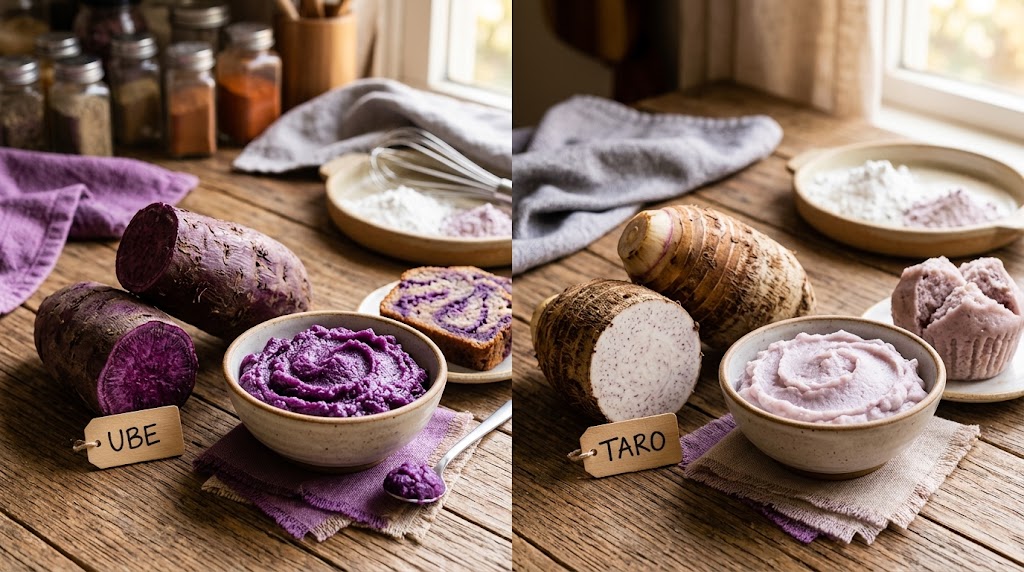
Ube is a true yam (Dioscorea alata) native to the Philippines with naturally deep purple flesh and a sweet, vanilla-nutty flavor. Taro (Colocasia esculenta) is a corm from a different plant family with pale, cream-colored flesh and a mild, starchy, earthy taste. They come from completely different botanical families and are not interchangeable in cooking.
Is ube the same as taro?
No. Ube and taro are different plants with different flavors, different botanical classifications, and different natural colors. Ube is naturally purple and sweet. Taro is naturally pale and mild. The confusion arises because both are tropical roots associated with purple-colored food in Asian and Asian-American cuisine.
Taro vs ube taste: which is sweeter?
Ube is significantly sweeter than taro. Ube has a natural vanilla-nutty sweetness even before any added sugar. Taro has very little natural sweetness, which is why taro milk tea and other taro sweet preparations require significant added sugar.
Is ube a taro root or a purple yam?
Ube is a purple yam, specifically Dioscorea alata. It is not taro and it is not a purple sweet potato, though it is often confused with both. It is a true yam that grows in tropical climates, particularly in the Philippines.
Why is taro milk tea purple if taro is not purple?
Commercial taro powder used by most bubble tea shops contains artificial purple or lavender food coloring, along with sugar, milk powder, and sometimes actual taro. Real taro is naturally white to cream-colored. The purple color comes from dye or from ube added as a natural colorant, not from taro itself.
Can you substitute ube for taro?
In most recipes, no. Ube is sweeter, creamier, and naturally purple, while taro is milder, drier, and pale. Swapping them changes the flavor, texture, and color of the dish. In some very sweet desserts where both would work, you can substitute, but the result will not be the same.
Which is healthier: ube or taro?
Both are nutritious root vegetables. Ube is higher in antioxidants (anthocyanins) due to its purple pigment and is a good source of Vitamin C, Vitamin A, and potassium. Taro is higher in dietary fiber than many root vegetables. Both are naturally gluten-free and vegan.
Does taro taste like ube?
No. Taro tastes mild, earthy, and starchy, similar to a subtle sweet potato without much sweetness. Ube tastes sweet, creamy, and nutty with vanilla notes. If you have tried one and expect the other to taste similar, you will be surprised.
Which is used in Filipino cuisine: ube or taro?
Ube is the iconic Filipino ingredient. Ube halaya, ube cake, ube ice cream, and ube pandesal are all Filipino classics. Taro is also used in Filipino cooking, particularly in savory dishes like sinigang and laing, but ube is the one at the center of Filipino dessert identity.
How do you tell ube apart from taro when buying?
Slice the root open. Ube flesh is deep purple or violet throughout. Taro flesh is white or cream with faint purple speckles. The skin of both is rough and brownish, which is where the visual similarity begins and ends. For packaged products, ube powder will specify "purple yam" or "ube," while taro will specify "taro" or "Colocasia."