
← Back to Reviews & Guides
Ube

Ube Mochi: Taste, Texture, and Where to Find the Best

Ube mochi combines Japanese mochi's chewiness with Filipino purple yam ice cream. Here is what it tastes like and which brands are worth buying.

Ube 101 Team ·
Ube Mochi: Taste, Texture, and Where to Find the Best
Font Size:

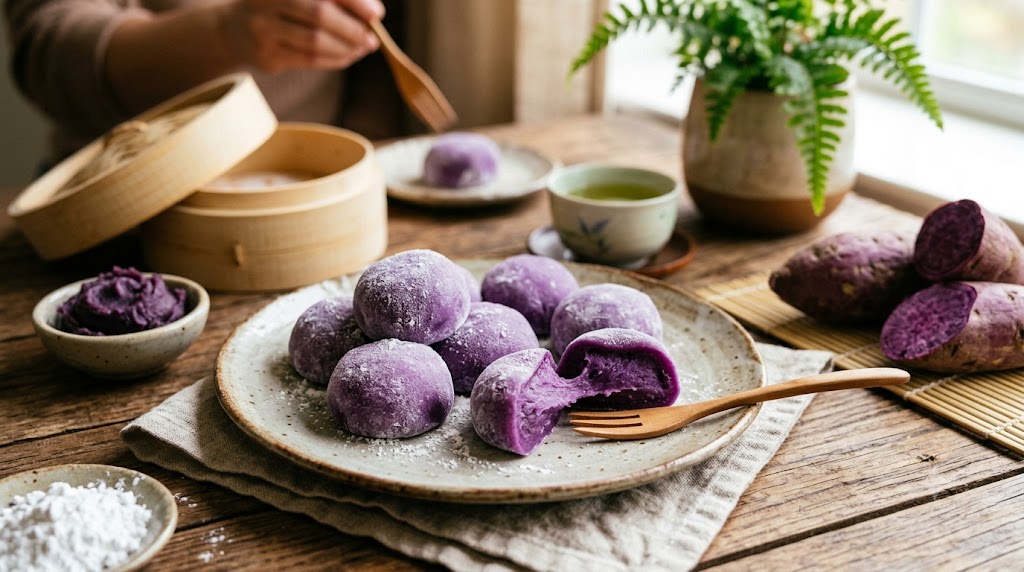
You have probably seen them. Small, pillowy, deeply purple spheres that look like they were plucked from a fairy tale. They are cold, slightly firm, and when you bite in, something wonderful happens: the chewy rice flour exterior gives way to creamy, sweet purple ice cream underneath.

Ube mochi is the meeting point of two beloved Asian food traditions. Japanese mochi (rice cake made from glutinous rice) provides the outer shell. Filipino ube provides the flavor. The combination is genuinely excellent, which is why it is one of the few ube products that has crossed over into mainstream American grocery stores without losing any of what makes it special.

Quick answer: Ube mochi is a frozen dessert made of ube ice cream wrapped in a chewy outer shell of mochi (Japanese glutinous rice cake). The ube filling tastes mildly sweet, creamy, and nutty with vanilla notes. The mochi exterior is soft, slightly chewy, and has a delicate sweetness. Together, they create one of the more distinctive and satisfying frozen dessert experiences available.


What Does Ube Mochi Taste Like?

Ube mochi tastes like soft, creamy, vanilla-nutty ice cream wrapped in a chewy rice cake shell. The ube flavor inside is gentle and sweet, with that characteristic pistachio-vanilla warmth that ube is known for. The mochi exterior adds a subtle sweetness of its own and a chewiness that no other dessert format quite replicates.

BecomeBetty’s review of Trader Joe’s Ube Mochi Ice Cream describes the ube ice cream inside as “subtly sweet with nutty notes of vanilla and coconut,” set in a mochi shell made from sweet rice flour, giving it “that signature chewiness that makes mochi-lovers weak at the knees.”

Temperature plays a role in the experience. Right from the freezer, the mochi is firm and the ice cream is dense. Let it sit for 3 to 5 minutes and the mochi becomes slightly softer and more pliable, which is when the texture is at its best.


Trader Joe’s Ube Mochi: The Accessible Option

Trader Joe’s Ube Mochi Ice Cream is sold in boxes of six pieces at around $4.99. Each piece is approximately 80 calories. The mochi shell on Trader Joe’s version is described by DailyWaffle as “thinner and stretchier” than other mochi ice cream varieties, which creates a more delicate bite. The ube ice cream inside is a soft lavender color and has a mild, appropriately sweet ube flavor.

It tends to sell out quickly when stocked. Gin & Pretzels’ review notes it “always seems to fly off the shelves,” which is consistent with the general pattern of Trader Joe’s ube products having strong demand and inconsistent availability.

It is not always available year-round. TJ’s sometimes rotates it seasonally. If you find it, buy two boxes.


My/Mochi Ube: The National Brand Option

My/Mochi (formerly known as Mikawaya) has been making mochi ice cream since 1993, making them one of the original players in this category. Their ube flavor is part of their main lineup and is available at many mainstream grocery stores including Whole Foods, Safeway, and Kroger, not just specialty stores.

My/Mochi tends to have a slightly thicker mochi shell and a more generous ice cream center than Trader Joe’s. Their ube flavor has a stronger, more assertive ube character. Tasting Table’s comparison of the two brands found My/Mochi at $6.49 per six-pack, slightly more expensive but more widely available.


Mochi Dochi and Artisan Ube Mochi

Mochi Dochi, a Los Angeles-based mochi ice cream company, produces some of the most talked-about artisan ube mochi in the U.S. Their versions use higher-quality ube ice cream bases and a more refined mochi shell, resulting in a more nuanced, authentically flavored experience than the grocery store options.

For people near Los Angeles, Mochi Dochi’s ube mochi is worth seeking out. For everyone else, Trader Joe’s and My/Mochi are genuinely solid options that deliver what ube mochi is supposed to be.


Homemade Ube Mochi

Making ube mochi at home requires glutinous rice flour (sold as mochiko in most Asian grocery stores) and ube ice cream or ube halaya. The mochi shell is made by mixing mochiko with sugar and water, microwave-cooking or steaming it until translucent and sticky, then shaping it around balls of frozen ube ice cream.

It takes practice to get the technique right, because mochi is sticky and working quickly before the ice cream melts requires confidence. But homemade mochi made with real ube halaya filling (no ice cream) is genuinely worth trying.


Key Takeaways

Ube mochi combines Japanese mochi’s chewy texture with Filipino ube’s creamy sweetness. Trader Joe’s version at $4.99 for six pieces is the most accessible, My/Mochi at $6.49 is more widely available nationally. Mochi Dochi in LA makes the artisan benchmark. Let it sit for 3 to 5 minutes before eating for the best texture. For more ube product comparisons, visit Ube 101.


अक्सर पूछे जाने वाले प्रश्न

What is ube mochi?

Ube mochi is a frozen dessert made of ube-flavored ice cream wrapped in a soft, chewy mochi shell made from glutinous rice flour. The exterior is soft and slightly sweet. The interior is creamy, cold ube ice cream.

What does ube mochi ice cream taste like?

Ube mochi ice cream tastes mildly sweet, creamy, and nutty with vanilla and coconut notes from the ube filling. The mochi shell adds chewiness and a subtle sweetness of its own.

Does Trader Joe's carry ube mochi?

Yes. Trader Joe's sells Ube Mochi Ice Cream in boxes of six at approximately $4.99. It tends to sell out quickly and availability can be seasonal. Check the frozen dessert section.

Where can I find ube mochi besides Trader Joe's?

My/Mochi brand ube mochi ice cream is available at Whole Foods, Safeway, Kroger, and many mainstream grocery stores. Mochi Dochi in Los Angeles makes an artisan version. Asian grocery stores like H Mart and 99 Ranch also stock various ube mochi products.

How is ube mochi different from regular mochi?

Regular Japanese mochi is a rice cake made from glutinous rice flour, eaten in various forms including with red bean paste filling. Ube mochi specifically uses ube (Filipino purple yam) flavored ice cream as the filling, combining Japanese and Filipino food traditions.

Is ube mochi gluten-free?

Yes. Mochi is made from glutinous rice flour, which despite the name "glutinous" is entirely gluten-free. Glutinous refers to the sticky texture, not the presence of gluten. Always check the specific brand label to confirm.