
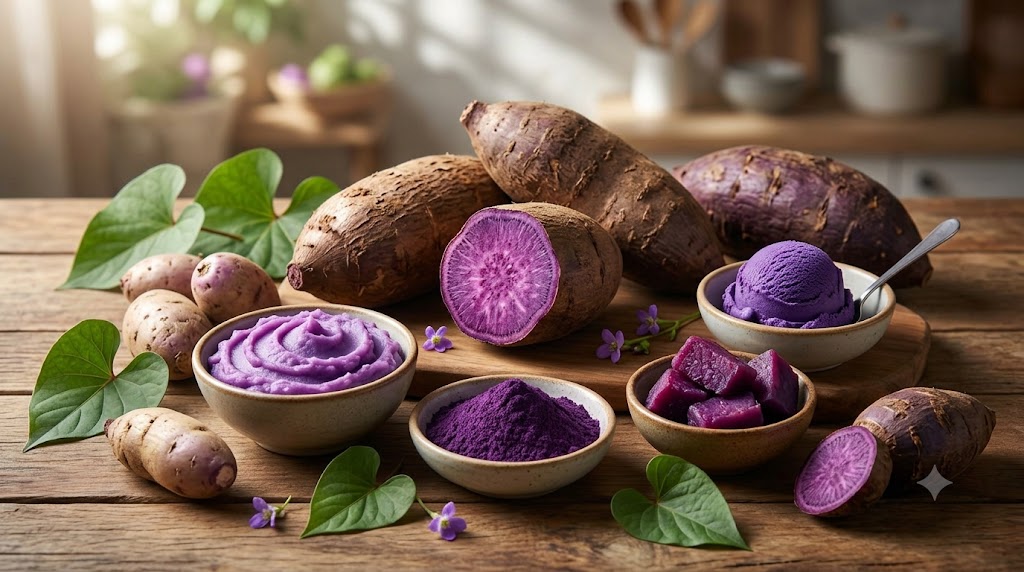
I bought two bags of ube powder last year from two different sellers, made the same recipe both times, and got two different shades of purple. One came out closer to lavender. The other looked almost like grape soda. Same recipe, same amount, same oven. That’s when I actually looked into why ube’s color isn’t as fixed as a bottle of food dye.
Ube’s color ranges from pale lavender to deep violet, and sometimes almost blue purple, and the shade depends on the variety of ube, the pH of whatever it’s mixed with, and how much heat it takes during cooking. The pigment behind all of it is a group of compounds called anthocyanins, the same family of pigments that color blueberries, purple cabbage, and red dragon fruit.
Where Ube’s Purple Actually Comes From
Ube’s color comes from anthocyanins, pigments that create red, blue, and purple shades in plants, and this is the same pigment class behind blueberries and purple cabbage. Ube isn’t dyed. The color is baked into the plant itself, sitting in the flesh long before it ever hits a mixing bowl.
That’s a big part of why ube became such a hit with bakers and beverage brands looking to ditch artificial dye. A yam that’s naturally purple all the way through does the coloring work on its own, no bottle of Red 40 or Blue 1 required.
Why the Shade Changes From Batch to Batch
Here’s the part most articles skip. Ube’s purple isn’t one fixed color, and there’s a real reason for that.
Variety and growing conditions. Fresh ube varies a lot, and anthocyanin content, sugar, and even aroma can shift across regions and harvest windows, even on the same farm, according to sourcing experts quoted in Food Ingredients First’s coverage of the ube supply chain. One batch can turn out deep violet while another leans toward pale lavender, purely because of where and when the yam was grown.
pH level. This is the big one. Anthocyanins are chemically sensitive to acidity, shifting toward red tones in acidic settings, and toward blue or deep purple in neutral to slightly alkaline settings. That’s why a splash of lemon juice or vinegar can turn a purple batter slightly pink, while baking soda can push it toward blue or even greenish gray. Bakers who’ve tried using ube powder in soap making run into this constantly, since lye is highly alkaline and can flip ube’s purple toward orange or brown if it’s not balanced with something acidic.
Heat and time. Anthocyanins are fragile pigments, and their stability breaks down under high heat, long cooking times, and exposure to light. A quick steam preserves more color than a long boil. That’s why some ube desserts hold a bright, almost neon purple while others look duller, even when made from the same tuber.
Powder versus extract. Ube powder made only from the yam itself relies completely on the root for its purple shade, so the resulting color tends to run a bit more muted, while ube extract often gets an assist from added food coloring to hit a brighter, more consistent purple. If you’ve ever noticed extract giving you a punchier color than powder, that’s exactly why.
What the Research Says About Stability
Food scientists have spent real time studying how to keep purple sweet potato and ube pigments from fading. One study on purple sweetpotato anthocyanins found the color held steady across a wide pH range, with the deepest, most stable magenta and purple tones sitting at low pH, while alkaline conditions caused faster color breakdown. That lines up with what home bakers notice in their own kitchens: a little acid protects the purple, while high heat and alkaline ingredients wear it down.
Ube Color at a Glance
| Factor | Effect on Color |
|---|---|
| Low pH (acidic, like lemon or citric acid) | Shifts toward pink or magenta, more stable over time |
| Neutral to high pH (alkaline, like baking soda) | Shifts toward blue purple, breaks down faster |
| High heat or long cooking | Fades the purple, can push toward gray or brown |
| Fresh, high anthocyanin variety | Deeper, more saturated violet |
| Ube powder (yam only) | Softer, more muted purple |
| Ube extract (with added color) | Brighter, more uniform purple |
Is Bright Purple Always Real Ube?
Not necessarily. Since real ube’s shade shifts with variety, pH, and cooking method, a suspiciously uniform, neon purple dessert is sometimes getting help from artificial dye rather than the yam alone. That doesn’t mean it’s a bad product, plenty of ube extracts are upfront about using added color for consistency, but if you’re after the pure, plant based version, a slightly uneven or muted purple is often the more honest sign that you’re tasting real ube. For a deeper look at how ube compares to its closest lookalike, check out our guide on ube vs purple sweet potato.
How to Keep Your Ube Color Looking Its Best
A few things help hold onto that vivid shade at home. Keep cooking time short where you can, since long boiling fades the pigment faster than quick steaming. Add a small splash of something acidic, like a bit of lemon juice or citric acid, if your recipe includes baking soda or another alkaline ingredient. Store ube powder in a cool, dark spot, since light speeds up pigment breakdown over time the same way it does with most natural food colorants.
If you want a reliable color without guessing, these ube products are worth trying:
- Jans Ube Powder for Baking, 5 oz, made from real purple yam with a naturally muted violet shade.
- MIKI’S Ube Powder 100g, Philippine Ube, sourced from the Philippines, good for drinks where color consistency matters.
- Bionutricia Ube Purple Yam Extract Powder 20:1, 7oz, concentrated for a deeper, more even purple in lattes and baking.
The Bottom Line
Ube’s purple color comes from anthocyanins, the same natural pigment family behind blueberries and purple cabbage, and it shifts shade based on the variety of yam, the acidity of what it’s mixed with, and how much heat it goes through during cooking. That range, from pale lavender to deep violet, is actually a sign you’re working with the real plant rather than a bottle of dye. Once you know what pushes the color one way or the other, you can get closer to the exact shade you want, whether that’s a soft lilac cake or a deep purple latte.
Want to see that color in action? Check out our full collection of ube dessert recipes on Flavor Advisor and get baking.
Frequently Asked Questions
What color is real ube?
Real ube ranges from pale lavender to deep violet purple. The exact shade depends on the yam variety, the pH of the recipe, and how much heat it's exposed to during cooking.
Why does ube's purple color vary so much?
Ube's anthocyanin pigments respond to acidity, heat, and light, so recipes with more acid tend to look pinker while alkaline ingredients push the color toward blue purple. Growing conditions also affect how much anthocyanin a particular batch of ube contains.
Is ube naturally purple or is it dyed?
Ube is naturally purple thanks to anthocyanin pigments in the flesh itself. Some commercial ube extracts add extra food coloring for a brighter, more uniform shade, but the base plant is purple without any dye.
Why did my ube dessert turn out a different color than the recipe photo?
Small differences in pH, cooking time, and the specific ube product you used can all shift the final shade. This is normal with a natural pigment and doesn't mean anything went wrong.
Does baking soda affect ube's color?
Yes. Baking soda is alkaline and can push ube's anthocyanins toward a bluer or even grayish tone. Adding a bit of citric acid or lemon juice can help counter that shift.
Does cooking ube for a long time fade its color?
Yes. Anthocyanins break down faster with prolonged heat exposure, so long boiling or baking can dull ube's purple more than a quick steam.
Is ube powder or ube extract more purple?
Ube extract is often more vividly purple because some brands add food coloring for consistency. Pure ube powder relies only on the yam's natural pigment, so its color tends to be softer.
What pigment makes ube purple?
Anthocyanins, a group of water soluble plant pigments, give ube its purple color. These same pigments appear in blueberries, purple cabbage, and red dragon fruit.
Can I make ube's color brighter without artificial dye?
Adding a touch of acid, like lemon juice or citric acid, can help stabilize and slightly brighten ube's natural purple. Keeping cooking time short also helps preserve the deepest color.
Does ube color fade over time in storage?
Yes, exposure to light and heat gradually breaks down anthocyanins, so ube powder and prepared ube dishes can lose some vibrancy the longer they sit. Storing ube powder in a cool, dark, airtight container slows that fading.