
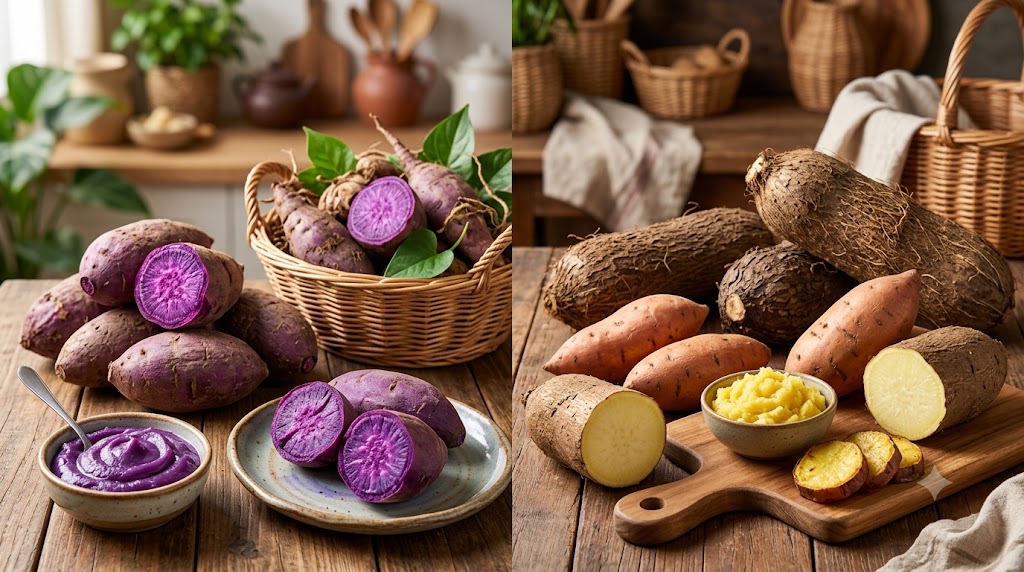
My neighbor grows sweet potatoes every fall and calls them yams, and every fall I have to stop myself from correcting her mid conversation. She’s not wrong by American grocery store standards. She’s just not talking about the same plant that shows up in a Filipino dessert menu under the same name. That mix up is everywhere, and it gets even messier once ube enters the picture, because ube actually is a yam. So where does that leave things?
Ube is a type of yam, but not every yam is ube. Ube (Dioscorea alata) is one specific species within the true yam family, grown mainly in the Philippines and known for its purple color and sweet, nutty flavor. Most yams sold around the world, including the white and yellow varieties common in Nigeria and West Africa, belong to different species within that same Dioscorea family and taste starchy and savory instead of sweet.
So Ube Really Is a Yam?
Yes. Ube’s full scientific name is Dioscorea alata, and it sits in the genus Dioscorea, which is the actual yam family. Dioscorea alata, also called ube, ubi, or purple yam among many other names, is a species of yam, with tubers usually running vivid violet purple to bright lavender, though some show up creamy white. So when someone tells you ube “isn’t a real yam,” they’ve got it backwards. Ube is a real yam. What most Americans call a yam at the grocery store usually isn’t.
The Grocery Store Confusion, Explained
Here’s where things get tangled. In the United States, sweet potatoes, especially those with orange flesh, are often labeled and sold as yams, even though botanically that’s incorrect. This labeling habit goes back to the mid 1900s, when producers started calling orange fleshed sweet potatoes “yams” to set them apart from the paler sweet potato varieties already on shelves, borrowing the word from an African language where it referred to a completely different plant. The name never got corrected. It just stuck.
So when your grocery store sells “yams” next to the Thanksgiving marshmallows, what you’re actually holding is a sweet potato (Ipomoea batatas), not a Dioscorea species at all. Real yams are a different plant altogether, and you’re far more likely to find them at an African, Caribbean, or Asian grocery store than at a mainstream American supermarket.
What Makes a Yam a Yam
True yams belong to the genus Dioscorea, and there are roughly 870 known species, though only a handful get eaten regularly since some are toxic without proper preparation. They grow as vines, not bushes, often climbing several feet with support. Their skin tends to be rough and bark-like, a world away from the thin, smooth skin on a sweet potato.
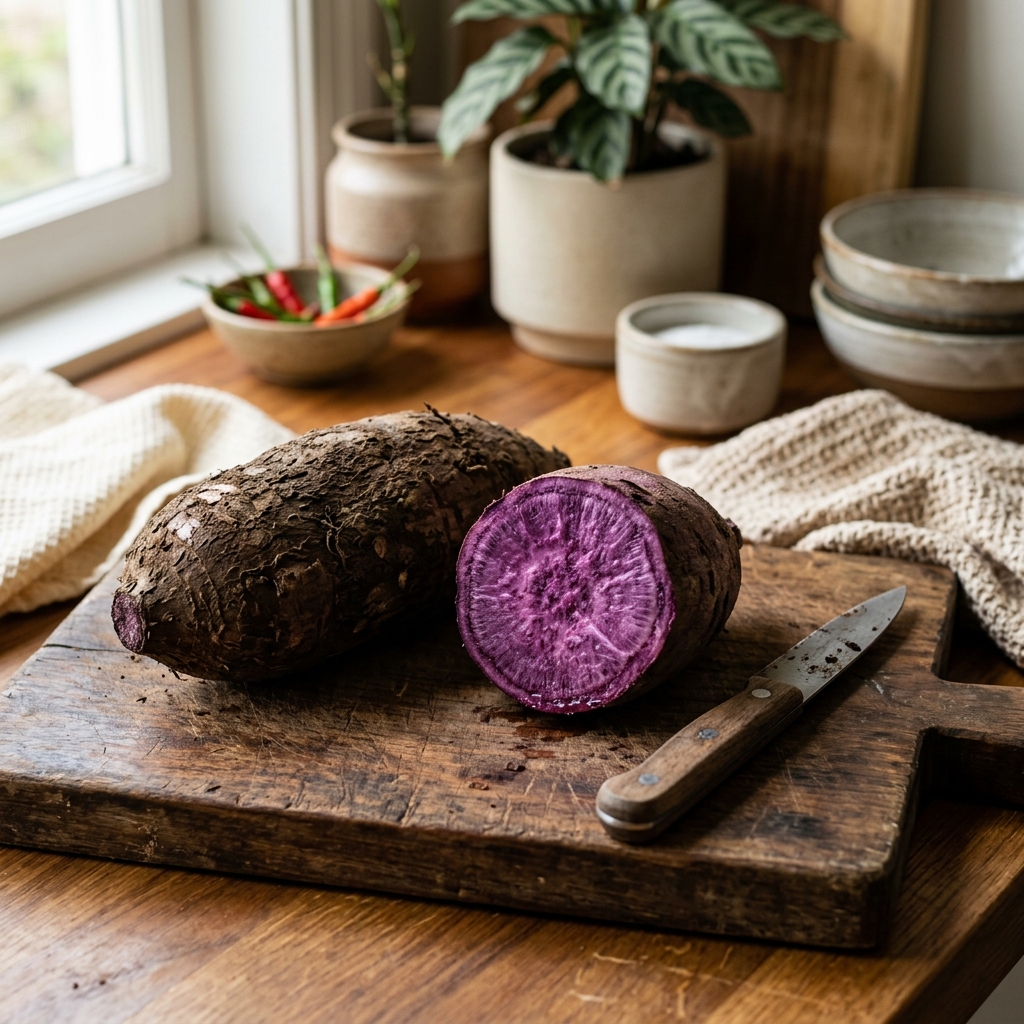
Common true yam species you’ll run into around the world include:
- Dioscorea rotundata and Dioscorea cayenensis, the white Guinea yams grown widely across Nigeria and West Africa, savory and starchy, used in dishes like pounded yam and yam porridge
- Dioscorea alata, ube, native to the Philippines and Southeast Asia, sweet, nutty, and purple
- Dioscorea esculenta, the lesser yam, grown across parts of Asia and the Pacific
- Dioscorea polystachya, known in Japan as nagaimo or mountain yam, sometimes eaten raw and grated
Nigeria alone accounts for a huge share of global yam production, and the crop carries deep cultural weight there, showing up in festivals and ceremonies tied to the harvest. None of that yam is sweet the way ube is. It’s closer in flavor and texture to a dense, mild potato.
Ube’s Place Inside the Yam Family
Ube stands out from its savory cousins mainly because of flavor and color. Purple yams have a mildly sweet, earthy, nutty taste, similar to sweet potato or taro, and the violet varieties turn dishes a vivid purple thanks to a heavy dose of anthocyanins. That sweetness is unusual for a true yam. Most Dioscorea species lean savory, closer to a yuca or a plain potato once cooked, which is exactly why ube gets pulled toward dessert menus while a Nigerian white yam gets pounded into a savory side dish.
Ube also carries more moisture and a creamier texture once cooked than the drier West African yam varieties, which makes it better suited for smooth desserts like ube halaya, ice cream, and cake fillings, and worse suited for the pounding and mashing techniques used with a white Guinea yam.
Ube vs Yam: Quick Comparison
| Feature | Ube (Dioscorea alata) | Common True Yam (e.g. Dioscorea rotundata) |
|---|---|---|
| Family | Dioscoreaceae | Dioscoreaceae |
| Region grown | Philippines, Southeast Asia | West Africa, especially Nigeria |
| Flavor | Sweet, nutty, vanilla like | Savory, starchy, mild |
| Flesh color | Violet to lavender | White to yellow |
| Texture cooked | Creamy, moist | Dense, dry |
| Typical use | Desserts, ice cream, cake | Pounded yam, soups, savory sides |
| US grocery availability | Rare fresh, common as powder/extract | Rare, found at African or Caribbean markets |
What About the Yam You Buy at Walmart?
That one isn’t a yam at all in the botanical sense. It’s a sweet potato, part of the Ipomoea batatas species, which belongs to the morning glory family, not Dioscoreaceae. If you want a real Dioscorea species, whether that’s ube or a savory West African yam, you’ll generally need to visit an Asian, African, or Caribbean grocery store, since fresh true yams rarely make it into mainstream supermarket produce sections. For more on how ube compares to the sweet potatoes filling most American shelves, check out our full breakdown in ube vs purple sweet potato.
Can You Substitute Yam for Ube?
Not really, if you want the taste and color right. A white or yellow Guinea yam won’t give you the purple hue or the vanilla like sweetness ube brings to a dessert. It will cook up dry and savory instead of creamy and sweet. If a recipe calls for ube and you can’t find it fresh, your better substitute is real ube powder or ube extract rather than a different yam species, since those keep the flavor and color intact without needing fresh tubers that are hard to source in most of the US.
- Jans Ube Powder for Baking, 5 oz, made from real purple yam, good for cakes and frosting.
- MIKI’S Ube Powder 100g, Philippine Ube, sourced from the Philippines, good in drinks and bubble tea.
- Bionutricia Ube Purple Yam Extract Powder 20:1, 7oz, concentrated, good for lattes and baking.
The Bottom Line
Ube belongs to the true yam family, so calling it a yam is accurate. What trips people up is that most yams eaten around the world are savory, dry, and pale, while ube is the sweet, purple outlier that gets used in desserts. Meanwhile, the “yam” sitting in most American produce aisles is a sweet potato and not a true yam at all. Once you know the difference between the plant families, the grocery store confusion mostly disappears, and you’ll know exactly which tuber to reach for depending on whether you’re making a dessert or a savory side.
Craving something purple and sweet? Browse our full lineup of ube recipes on Flavor Advisor and put real ube to work in your next bake.
Frequently Asked Questions
Is ube a yam?
Yes. Ube, scientifically named Dioscorea alata, belongs to the true yam family. It's a sweet, purple species within a family that mostly produces savory, starchy yams.
Is ube the same as a purple yam?
Yes, ube and purple yam refer to the same plant. Purple yam is simply the English name for Dioscorea alata, while ube is the Filipino name most commonly used today.
What's the difference between ube and the yams sold in American grocery stores?
American grocery store "yams" are almost always sweet potatoes (Ipomoea batatas), which belong to a completely different plant family than true yams. Ube belongs to the actual yam genus, Dioscorea.
Is Nigerian yam the same as ube?
No. Nigerian yam is usually Dioscorea rotundata or Dioscorea cayenensis, both savory white fleshed species. Ube is Dioscorea alata, sweet and purple. They're related but distinct species within the same family.
Can I substitute a regular yam for ube in a recipe?
Not well. Regular yams are dry and savory, while ube is moist, sweet, and purple. Swapping one for the other changes the flavor, texture, and color of the finished dish.
Why do people confuse ube with sweet potato instead of yam?
Because purple sweet potato shares ube's color and a similar sweetness, while most true yams are pale and savory. That visual overlap makes purple sweet potato the more common point of confusion, even though ube is technically a yam.
Where can I buy real ube in the US?
Fresh ube is hard to find outside specialty Filipino or Asian grocery stores. Ube powder and ube extract are more widely available and are sold online and at larger Asian supermarket chains.
Does ube taste like other yams?
Not really. Most true yams taste starchy and savory, closer to a potato. Ube stands apart with a sweet, nutty, vanilla like flavor that makes it suited for desserts rather than savory cooking.
Is purple yam healthier than white yam?
Purple yam contains anthocyanins, the same antioxidant pigments found in blueberries, which white and yellow yams lack. Both types offer fiber and complex carbohydrates, but the purple variety carries extra antioxidant compounds tied to its color.
What countries eat the most true yams?
West African countries, particularly Nigeria, are the largest producers and consumers of true yams globally, where they're used in dishes like pounded yam and yam porridge. Ube consumption is concentrated in the Philippines and, increasingly, Filipino communities abroad.