
There is a particular kind of bread that makes people queue outside Filipino bakeries before they open. If you have ever walked past a Filipino bakery and smelled something soft and warm and slightly sweet coming from the door, there is a good chance it was fresh ube pandesal just out of the oven.
Ube bread is not just one thing. It is a category of Filipino baked goods that uses ube as both a flavoring and a color, producing rolls, loaves, and filled pastries that range from everyday breakfast staples to celebration-worthy treats.
Quick answer: Ube bread refers to Filipino yeast-raised breads made with ube (purple yam) in the dough, typically through ube halaya, ube powder, or ube extract. The most famous form is ube pandesal (Filipino bread rolls with cheese filling), but the category also includes ube loaf bread, cream cheese rolls, and sweet spiral buns. The bread tastes mildly sweet, soft, and faintly nutty with the characteristic warmth of ube.
Ube Pandesal: The Star of Filipino Bread Culture
Pandesal is the most iconic Filipino bread. The name means “salt bread” in Spanish, a holdover from the Spanish colonial period, though the bread itself is faintly sweet rather than salty. It is a soft, slightly crusty roll coated in fine breadcrumbs that Filipinos have eaten for breakfast every morning since the Spanish introduced it to the Philippines in the 16th century.
Ube pandesal is a relatively recent innovation. As ube’s popularity surged on social media, Filipino bakers began adding ube to the classic pandesal dough. According to Karen’s Kitchen Stories, the trend emerged during the COVID-19 lockdown period and went viral through social media, with Kimmy Bakes Bakeshop in Cavite, Philippines often credited as one of the early pioneers.
The result is exactly what it sounds like: a pandesal that is softly purple inside, with the same fluffy, slightly sweet character as the original but with ube’s gentle vanilla-nutty flavor woven through. The most popular version fills the center with melted cheese, creating a contrast between the sweet ube dough and the salty, creamy cheese.
What Ube Cheese Pandesal Tastes Like
Ube cheese pandesal tastes like a soft dinner roll with a subtle sweetness, a faint ube flavor, and a melted cheese pull in the center that provides salty contrast. The exterior is lightly crisp from the breadcrumb coating. The interior is pillowy and warm.
The cheese options make a difference. Traditional Filipino bakers use quick-melt cheese (similar to Velveeta), which melts completely and becomes creamy. Cream cheese is increasingly popular for its milder, slightly tangy quality that pairs naturally with ube’s sweetness. Cheddar gives a sharper flavor. All three work, and all three are delicious in different ways.
Riverten Kitchen’s popular recipe specifically calls ube halaya “the secret to a luscious, pillowy-soft bread” and recommends buying it from Filipino restaurants that make it from scratch for the most authentic result.
Other Types of Ube Bread
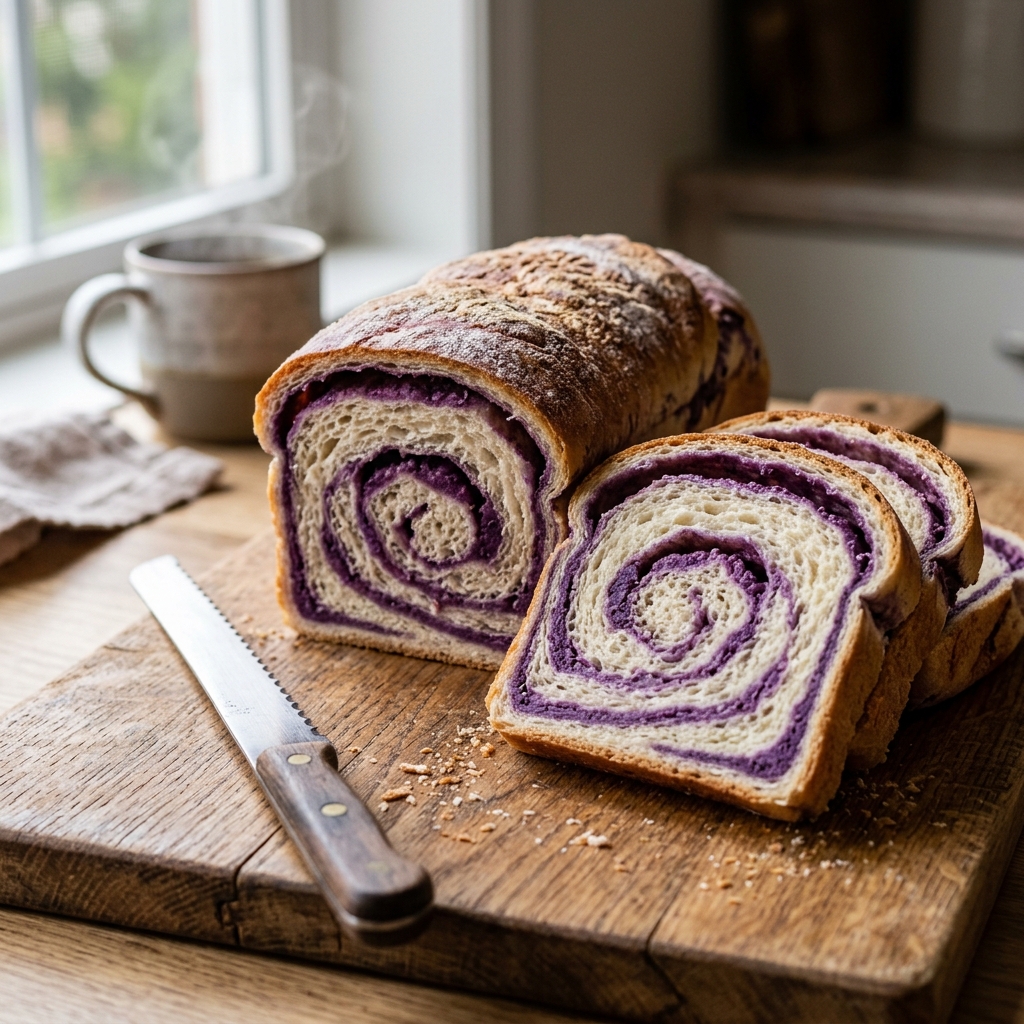
Ube loaf bread: A sandwich-style loaf with ube woven through the dough. Slices reveal soft purple crumb throughout. Best toasted and spread with butter or ube butter.
Ube cream cheese bread rolls: Yeasted rolls filled with sweetened cream cheese, often with additional ube halaya alongside the cheese. A slightly more indulgent version than basic pandesal.
Ube ensaymada: Filipino ensaymada is a buttery, fluffy spiral bread traditionally topped with butter, sugar, and grated cheese. Ube ensaymada adds ube to the dough and sometimes to the topping, creating one of the richest Filipino bread experiences available.

Ube spiral buns (ube bread rolls): Sweet rolls with ube filling swirled through, similar to cinnamon rolls but with ube jam replacing the cinnamon sugar. Some versions include a coconut topping.
Making Ube Bread at Home
The critical thing to understand about ube pandesal and most ube breads is that the ube goes into the dough itself, not just as a filling. This requires hydrating the ube properly. Most home bakers use either reconstituted ube powder (mixed with boiling water to form a paste), ube halaya (the jam itself), or ube extract added to the liquid ingredients.
Ube extract is the easiest option for home bakers because it does not change the dough hydration. It provides color and flavor without adding moisture that would require recipe adjustments.
Ube halaya in the dough adds the richest flavor but also adds moisture, which can make the dough stickier and require slightly less additional liquid.
Key Takeaways
Ube bread spans from the everyday ube pandesal with melted cheese to special occasion ensaymada and cream cheese rolls. All of them share the characteristic softness of Filipino yeast bread with the gentle sweet, nutty character of ube. The cream cheese pairing is one of the best sweet-savory combinations in the ube repertoire. For ube product guides and recipe comparisons, visit Ube 101.
الأسئلة الشائعة
What is ube pandesal?
Ube pandesal is a Filipino bread roll made with ube (purple yam) in the dough, giving it a soft purple color and a mildly sweet, faintly nutty flavor. It is typically filled with melted cheese and coated with breadcrumbs before baking.
What does ube bread taste like?
Ube bread tastes soft, slightly sweet, and mildly flavored with ube's warm vanilla-nutty quality. The breadcrumb exterior adds a light crunch. When filled with cheese, the sweet-salty contrast is particularly satisfying.
What is the best filling for ube pandesal?
Melted quick-melt cheese (Velveeta-style) is the traditional Filipino choice. Cream cheese is increasingly popular for its mild, tangy quality that pairs well with ube's sweetness. Cheddar provides more sharpness. Ube halaya alongside cheese creates a double ube experience.
What is ube cream cheese bread?
Ube cream cheese bread is a yeasted Filipino roll filled with sweetened cream cheese filling. The ube is in the dough, the cream cheese is in the center. The combination of sweet, fluffy bread and tangy cream cheese is one of the best pairings in Filipino baking.
How is ube loaf bread different from ube pandesal?
Ube loaf is a sandwich-style sliced bread with ube throughout the dough. Ube pandesal is an individual roll. Both use ube in the dough, but the loaf format is better for slicing and toasting while pandesal is eaten as a hand-held roll.
Can I make ube pandesal without ube halaya?
Yes. You can use ube extract alone for color and flavor without affecting dough texture significantly. Ube powder reconstituted with hot water is another option that delivers more authentic flavor than extract alone.