
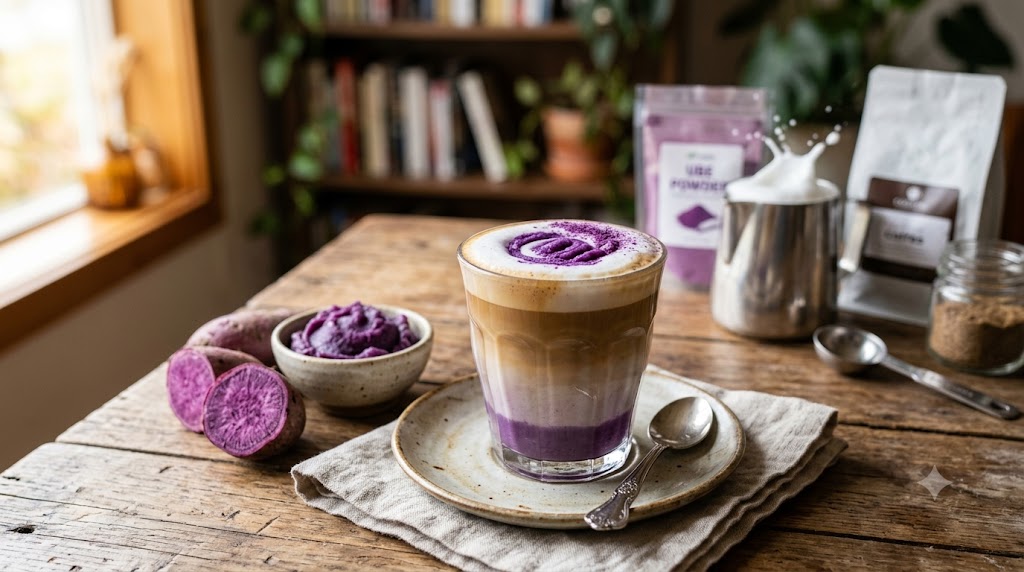
Somewhere between your third scroll through TikTok this week, a vivid purple drink appeared. Maybe it was layered dramatically, the coffee seeping through violet foam. Maybe someone was clearly enjoying it more than any beverage deserves. And now you are wondering what an ube latte actually tastes like, and whether it is as good as it looks or just a color trick with marketing attached.
The short answer is that it genuinely tastes interesting, it takes about five minutes to make at home, and once you make it with real ube powder instead of a coffee shop syrup, it is better than most versions you will pay $7 for.
What an ube latte is: An ube latte is a coffee drink made by combining ube (purple yam) with steamed or frothed milk and espresso. The ube component can be ube syrup, ube extract, ube powder, or ube halaya (ube jam). The drink is naturally purple, mildly sweet, and creamy, with the ube bringing vanilla, hazelnut, and subtly earthy notes that complement coffee’s bitterness in a way that is genuinely pleasant.
What Does an Ube Latte Taste Like?
An ube latte tastes mildly sweet, creamy, and warm in a way that is hard to compare directly to anything else. The ube brings a soft vanilla-nutty flavor, faint coconut aroma, and a gentle earthiness that sits underneath the coffee rather than competing with it.
The best description comes from UbePure’s guide: “somewhere between vanilla ice cream and roasted sweet potato, but more nuanced.” That is a good mental picture. It is not sharp. It is not intensely flavored. It is subtle and approachable, which is part of why it works so well with coffee, which already has its own strong personality.
If you have tried a vanilla latte, an ube latte sits in a similar neighborhood but with more complexity and less sweetness. If you have tried a pistachio latte, ube latte is even softer and more floral.
One honest note: if your ube latte is made with commercial ube extract or syrup (which is how many coffee shops make it, including Starbucks), the flavor will be more vanilla-hazelnut and less of the genuine ube root character. My Ube Bae’s 2026 honest review of the Starbucks ube latte put it directly: “it tastes like vanilla-hazelnut coffee with food coloring.” That is what extract-based versions deliver. When made with real ube powder, the flavor is more authentic, earthier, and more interesting.
Ube Latte vs Taro Latte: What Is the Difference?
These two purple drinks get confused more than any other coffee shop comparison right now.
An ube latte uses purple yam (Dioscorea alata), which is naturally sweet, vanilla-forward, and genuinely purple. The flavor is dessert-adjacent.
A taro latte uses taro (Colocasia esculenta), which is naturally pale and starchy with a mild, earthy flavor. Most commercial taro latte powders are artificially colored purple and sweetened significantly.
The taste difference is real. Ube lattes taste sweeter and more dessert-like with clear vanilla notes. Taro lattes taste milder, starchier, and slightly earthy.
If you have been ordering taro lattes and wondering if ube would be different: it will be noticeably sweeter and more vanilla-forward. Most people who try both prefer ube.
Ube Latte at Starbucks: What to Know
Starbucks has offered ube drinks in a few different markets and formats. Their Iced Ube Coconut Macchiato, which features espresso, milk, toasted coconut syrup, and ube coconut cold foam, was a notable release in the Philippines first and has appeared in U.S. test markets.
The honest review of Starbucks ube drinks is consistent across tasters: the ube flavor is mild and artificial, the color is vivid from added dye, and the experience is more of a sweet purple coffee drink than an authentic ube experience. At $6.50 to $7.50 per grande, you are mostly paying for the visual and the convenience.
Making a better version at home costs roughly $0.90 per cup using real ube powder, according to My Ube Bae’s cost analysis.
How to Make an Ube Latte at Home (Hot or Iced)
This is a five-ingredient recipe that takes under five minutes. The key variable is what ube product you use, and the options change the outcome meaningfully.
Ingredients (1 serving): 1 teaspoon ube powder (reconstituted, see below) OR 1 teaspoon ube extract OR 1 tablespoon ube halaya 1 cup milk of your choice (oat milk is the most popular for its creaminess and neutral sweetness) 1 to 2 shots espresso (or 1/2 cup strong brewed coffee)
- 1 teaspoon sweetener (maple syrup, simple syrup, or honey), optional
- Splash of vanilla extract, optional but highly recommended
Ube powder option (most authentic): Dissolve 1 teaspoon ube powder in 1 to 2 tablespoons of hot water and whisk until smooth. Let it hydrate for a few minutes until the paste is lump-free.
Ube extract option (fastest, most vivid color): Use ube extract directly. No reconstitution needed. One teaspoon per serving is a strong start, go up or down based on how intense you want the flavor.
Ube halaya option (richest flavor): Stir one tablespoon of ube halaya into a splash of hot water until smooth. This delivers the fullest, most authentic ube taste and also adds natural sweetness from the condensed milk in the halaya.
For iced ube latte:
- Dissolve or prepare your ube base in the bottom of your glass.
- Add your sweetener and a splash of vanilla extract if using.
- Add ice cubes to fill the glass about two thirds.
- Pour cold milk over the ice.
- Pull your espresso shot and pour it over the milk. The layers will settle and gradually mix, which is the visual you are going for.
- Stir gently before drinking.

For hot ube latte:
- Dissolve or prepare your ube base in your mug.
- Heat your milk in a small saucepan over medium heat. Do not boil. Froth with a handheld milk frother.
- Pull your espresso shot.
- Pour espresso into the mug with the ube base, stir briefly.
- Pour frothed milk over the top.
- Optional: garnish with a sprinkle of ube powder and toasted coconut flakes.
Pro tip from Ovalware’s guide: pour espresso over ice first, then add the frothed milk. This creates a temperature contrast that chills the espresso fast and produces a more layered visual.
Pro tip from UbePure: adding vanilla extract alongside the ube “amplifies ube’s natural flavor notes by 10x.” Vanilla and ube are natural partners, and this single addition makes a noticeable difference.
Which Milk Works Best in an Ube Latte?
Milk choice matters more than most ube latte guides admit. Here is an honest breakdown.
Oat milk (barista-style) is the most popular choice for good reason. It froths well, has a natural sweetness that does not compete with ube, and creates a creamy texture without any dairy. Multiple recipe developers independently land on oat milk as the first choice.
Coconut milk is arguably the best flavor pairing for ube. The coconut notes in coconut milk reinforce ube’s natural coconut-adjacent aroma. Rice Life Foodie, who focuses on Filipino-inspired recipes, specifically recommends coconut milk as “the Filipino way” to make an ube latte. The flavor depth is noticeably better.
Whole dairy milk gives the richest, creamiest result. If you are not avoiding dairy and want the most cafe-comparable texture, whole milk is a strong choice.
Almond milk works but produces a thinner texture and a slightly nutty flavor that can compete with ube’s own nuttiness.
Oat milk + coconut milk blend is a creative option that gets the creaminess of oat milk plus the flavor synergy of coconut. Worth trying if you want to optimize for ube’s full character.
Is Ube Latte Caffeinated?
Ube itself has zero caffeine. It is a root vegetable. So a plain ube powder latte made without espresso or coffee is entirely caffeine-free.
A “dirty ube latte” with one shot of espresso contains approximately 63mg of caffeine (standard single espresso). A double-shot version contains around 126mg.
If you want the purple drink experience without any caffeine, make the ube powder base with your milk of choice and skip the espresso entirely. It is a delicious warm or iced drink on its own.
Making an Ube Coconut Macchiato (Starbucks-Style at Home)
If you want to recreate the layered purple coconut macchiato that made Starbucks’s ube drink go viral, here is the method based on Kat’s Kitchen’s detailed recreation guide.
You will need: toasted coconut syrup (homemade or store-bought), milk, heavy cream, ube extract, vanilla syrup, and espresso.
- Fill your glass with ice.
- Add toasted coconut syrup and milk to the glass and stir.
- In a separate small container, combine vanilla syrup, a splash of milk, a small amount of heavy cream, and just a tiny splash of ube extract. Froth this mixture with a handheld frother for about 15 seconds until thick and airy.
- Pull two espresso shots and pour them over the milk base.
- Spoon or pour the ube cold foam over the top.
- Garnish with toasted coconut flakes.
Important note from Kat’s Kitchen on the ube foam: “only use a tiny splash of ube extract since it is strong and can easily turn the cold foam from a light purple color to a deep dark purple.” Start with less than you think you need.
Ube Latte Recipe Variations
Once you have the basic recipe, here is where it gets more interesting.
Ube matcha latte: Replace the espresso with one teaspoon of ceremonial-grade matcha whisked with two ounces of hot water. Layer under the ube milk base. The green matcha and purple ube create a two-tone visual that is even more striking than the standard version.
Ube bubble tea latte: Make the ube milk base, skip the espresso, and add cooked tapioca pearls at the bottom of the glass before adding the ube milk. You get the flavor of an ube milk tea with the texture of a boba drink.
Ube lavender latte: Add a teaspoon of lavender simple syrup alongside the ube base. The floral notes of lavender and the vanilla-earthy notes of ube pair surprisingly well.
For more ube recipe ideas across all dessert and drink categories, you can find full guides at Ube 101.
Key Takeaways
An ube latte is a purple coffee drink made with ube (purple yam), steamed milk, and espresso. It tastes mildly sweet, creamy, and vanilla-nutty with a subtle earthiness. Made with real ube powder, it is more authentic and more interesting than the extract-based versions most coffee shops serve. Oat milk and coconut milk are the best pairings. A splash of vanilla amplifies the ube flavor significantly. And making it at home takes five minutes.
References
- My Ube Bae. “Starbucks Ube Latte 2026: Review and DIY Recipe.” myubebae.com. April 2026.
- Rice Life Foodie. “How to Make the Perfect Ube Latte at Home.” ricelifefoodie.com. January 2025.
- Ovalware. “Ube Latte Recipe: How to Make the Viral Purple Coffee Drink at Home.” ovalware.com. June 2026.
- Picky Eater Blog. “Iced Ube Latte.” pickyeaterblog.com. September 2025.
- Takes Two Eggs. “How to Make an Iced Ube Latte Recipe.” takestwoeggs.com. October 2024.
- Kat’s Kitchen. “Starbucks Iced Ube Coconut Macchiato.” katerinafaith.com. March 2026.
- UbePure. “How to Make an Ube Latte at Home.” uubepure.com. May 2026.
- Romy London UK. “Ube Latte Recipe.” romylondonuk.com.
الأسئلة الشائعة
What is an ube latte?
An ube latte is a coffee drink made with ube (Dioscorea alata, the Filipino purple yam), steamed or frothed milk, and usually espresso. The ube component can be ube extract, ube powder, ube syrup, or ube halaya. It is naturally purple and tastes mildly sweet with vanilla, hazelnut, and subtle earthy notes.
What does an ube latte taste like?
An ube latte tastes mildly sweet, creamy, and softly flavored with vanilla and nutty notes. The flavor is subtle rather than intense, making it work well alongside coffee. It is softer and more floral than a pistachio latte and less sharp than a vanilla latte.
How do you make an ube latte?
Dissolve ube powder or ube extract in a small amount of hot water. Mix with milk and sweetener of your choice. Add espresso shots over ice (for iced) or pour frothed hot milk over espresso (for hot). Vanilla extract and oat milk or coconut milk are the recommended additions for best flavor.
Does Starbucks have an ube latte?
Starbucks has offered ube-flavored drinks in limited markets, including an Iced Ube Coconut Macchiato in the Philippines and select U.S. test locations. The Starbucks version uses an ube syrup rather than real ube, so the flavor is more artificial vanilla-hazelnut. Availability varies by location.
Is an ube latte caffeinated?
Ube itself has zero caffeine. An ube latte becomes caffeinated only when espresso is added. Without espresso, it is a completely caffeine-free drink. A single-shot ube latte contains approximately 63mg of caffeine from the espresso.
What milk is best for an ube latte?
Oat milk (barista-style) froths well and complements ube's flavor without competing. Coconut milk is the best flavor pairing, reinforcing ube's natural coconut aroma. Whole dairy milk gives the richest texture. All options work, but oat and coconut are most recommended.
Can you make an ube latte without espresso?
Yes. An ube latte without espresso becomes a purple ube milk drink, which is caffeine-free and can be served hot or iced. It is delicious as a standalone non-coffee beverage, especially with coconut milk and a touch of honey.
What is the difference between an ube latte and a taro latte?
Ube lattes use naturally purple, sweet purple yam with vanilla-nutty flavor. Taro lattes use pale, starchy taro root with a mild earthy taste and artificial purple coloring in most commercial versions. Ube lattes taste sweeter and more dessert-forward. Taro lattes taste milder and starchier.
Where can I find an ube latte near me?
Filipino bakeries and coffee shops, Asian-American cafes, and specialty coffee shops in major cities often carry ube lattes. Starbucks has offered it in select test markets. Making it at home is the most reliable option and costs significantly less.
Is an ube latte healthy?
A standard homemade ube latte made with ube powder and oat milk has approximately 120 to 150 calories per cup. It contains natural anthocyanin antioxidants from the ube. Coffee shop versions with syrups and cream can be 400 calories or more. Made at home with real ube powder and minimal sweetener, it is a relatively light, nutritious drink.