
← Back to Reviews & Guides
Ube

Ube Desserts: Every Type Explained (Full Guide)

From halaya to halo-halo, here's every major type of ube dessert explained, with real flavor and texture notes for each.

Ube 101 Team ·
Ube Desserts: Every Type Explained (Full Guide)
Font Size:

My cousin brought home a box of assorted Filipino pastries once, six kinds of purple, and asked me to guess which ones had real ube and which ones didn’t. I got two out of six right. That’s the thing about ube desserts. There are so many forms now, from a simple jar of jam to a full three layer cake, that even people who grew up eating them can lose track.

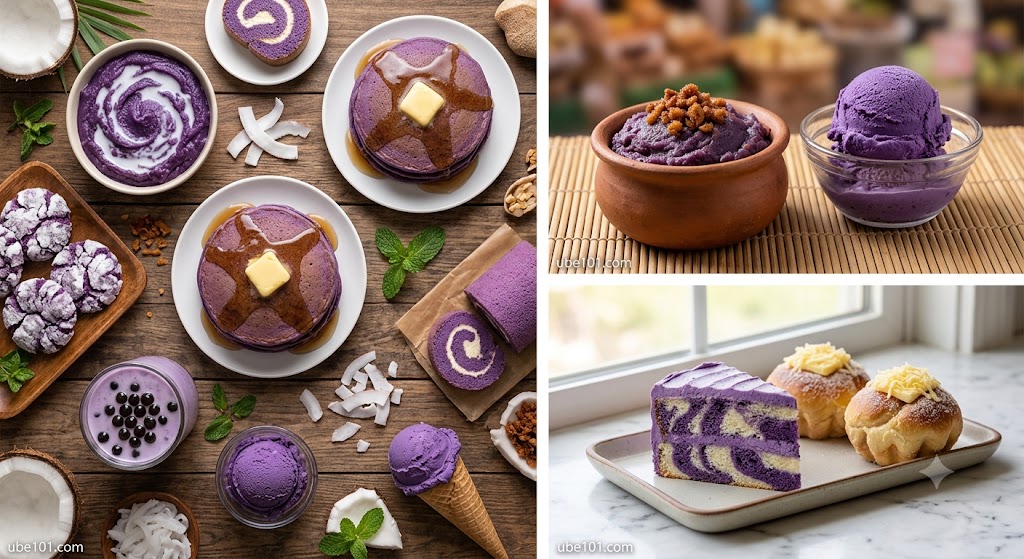
Ube shows up in Filipino desserts in a handful of core forms: halaya (the base jam), cakes, ice cream, mochi, cheesecake, donuts, and halo-halo, where ube usually plays a supporting role rather than the star. Each one uses ube a little differently, and the flavor and texture shift depending on what it’s mixed with.

Ube Halaya: Where Almost Everything Starts

Ube halaya (also called halayang ube) is the root of nearly every ube dessert on this list. It’s made by boiling and mashing purple yam, then cooking it down with coconut milk, evaporated milk, condensed milk, butter, and sugar until it turns into a thick, rich jam.

On its own, halaya tastes rich and only moderately sweet, with a nutty depth that plain boiled ube doesn’t have. That matters more than people realize, since raw ube by itself is close to flavorless, similar to sweet potato or taro. The distinctive taste people call “ube flavor” is really the flavor of halaya, built from the cooking process, not the raw tuber.

Traditionally, halaya gets topped with latik (crisp coconut curds), shredded cheese, or sweetened macapuno strings before serving. It’s eaten on its own as a snack, spread on bread, or folded into practically every other dessert on this list.

Ube Cake: The Party Centerpiece

Ube cake usually takes the form of a chiffon or sponge cake, light and airy, colored a deep violet from ube mixed directly into the batter. The flavor comes across softer than halaya, with a gentle sweetness and a slight nuttiness that pairs well with cream cheese frosting or a coconut based filling.

Bakeries across the US have started stacking ube cake with other Filipino flavors for extra depth. Café 86’s ube tres leches, for one example, layers an ube sponge cake soaked in coconut milk and evaporated milk, then tops it with whipped halaya and crunchy meringue, three textures and three levels of sweetness in one slice.

Ube Muffins

Ube Ice Cream: Creamy, Nutty, and a Little Coconut Forward

Ube ice cream has a long history in Filipino food culture, with the earliest recorded ube ice cream recipe dating back to 1922, right around when American occupation introduced ice cream to Filipino desserts more broadly. The flavor comes through creamy and mildly sweet, often carrying coconut or macapuno alongside the ube itself.

It’s one of the most common ways Americans first try ube, thanks in part to grocery chains like Trader Joe’s stocking ube flavored ice cream in past seasons, plus its rise on social media for that bright violet color. Ube ice cream shows up constantly as a topping for halo-halo, though plenty of Filipino cooks skip it there since the extra creaminess can compete with the dessert’s other layers.

Ube Mochi and Ube Mochi Donuts: Chewy Meets Nutty

Mochi made with ube takes on a soft, chewy bite with a subtle purple color and a flavor that leans toward pistachio and vanilla, a combination bakers and home cooks both mention often when describing it. Ube mochi donuts specifically combine glutinous rice flour with ube halaya and ube extract, giving you a donut that’s crisp outside and chewy inside, closer to a mochi ball shaped like a donut than a traditional cake donut.

The flavor works because ube’s natural sweetness plays well against the neutral, slightly springy base that rice flour brings, so the ube doesn’t get lost the way it sometimes does in heavier baked goods.

Ube Cheesecake: Tangy Meets Sweet

Ube cheesecake pairs ube halaya with cream cheese, and the contrast is what makes it work. Cream cheese brings tang and richness, while ube brings sweetness and that nutty, vanilla like depth, and the two balance each other out instead of one overpowering the other. Some versions bake the ube directly into the cheesecake batter, and others swirl ube halaya through a plain cheesecake base for a marbled look.

If you want a full walkthrough on making one at home, we cover it step by step in our [ube cheesecake guide].

Ube Macapuno: A Pairing, Not Just a Dessert

Ube served with macapuno, the sweet, chewy coconut sport meat, is common enough that it has its own name: ube macapuno. This combination shows up across multiple desserts, not just one, including ube macapuno cakes and ube macapuno ice cream. The pairing works because macapuno’s chewy, jelly like texture gives ube’s smooth creaminess something to contrast against, plus a coconut sweetness that complements ube’s own subtle sweetness instead of competing with it.

Halo-Halo: Where Ube Plays a Supporting Role

Halo-halo, which translates to “mix mix” in Tagalog, is considered the unofficial national dessert of the Philippines. It’s a layered, shaved ice dessert built from ingredients like sweetened beans, coconut strips, jackfruit, agar jelly, and leche flan, with ube halaya or ube ice cream added on top, often alongside other toppings rather than standing alone.

Ube is treated as one of the more essential ingredients in halo-halo, since it adds both flavor and that signature violet color, though the dessert works and gets made plenty of ways without it. Traditional versions layer the fruits and sweets at the bottom, add shaved ice on top, then finish with a drizzle of evaporated or coconut milk right before serving.

Ube Desserts at a Glance

DessertUbe’s RoleFlavor NotesTexture
Ube halayaThe base, cooked from raw ubeRich, nutty, moderately sweetThick, jam like
Ube cakeMixed into batterSoft, light sweetnessAiry, sponge like
Ube ice creamMain flavorCreamy, mildly sweet, coconut notesSmooth, cold
Ube mochi/donutsMixed with rice flourPistachio and vanilla notesChewy outside and in
Ube cheesecakeSwirled or baked inSweet and tangy balanceDense, creamy
Ube macapunoPaired with coconut sportSweet, coconut forwardCreamy plus chewy
Halo-haloTopping, one of severalAdds sweetness and colorIcy, mixed textures

Which Ube Dessert Should You Try First?

If you’ve never had real ube before, halaya is the most honest starting point, since it’s the base flavor everything else builds from. Want something cold and familiar? Ice cream is the easiest entry point most grocery stores stock at least occasionally. Craving texture over flavor intensity? Go for mochi or mochi donuts. And if you want the full Filipino dessert experience in one sitting, halo-halo gives you a taste of ube alongside half a dozen other classic flavors in the same glass.

The Bottom Line

Ube desserts range a lot further than most people expect once you look past the color. Halaya sets the flavor foundation, cake and cheesecake lean into that flavor with different textures, ice cream and mochi bring their own spin, and halo-halo treats ube as one great flavor among several. Once you know what each one is actually doing with the ube, picking your next purple dessert gets a lot easier.

Craving something specific from this list? Browse our full collection of ube dessert recipes on Ube101 and pick your next bake.


الأسئلة الشائعة

What is the most popular ube dessert?

Ube halaya and ube ice cream are generally considered the two most common and recognizable ube desserts, since almost every other ube dessert builds off one or both of them.

What does ube taste like in desserts?

Ube halaya, the base flavor behind most ube desserts, tastes rich and nutty with only moderate sweetness. Raw ube on its own is nearly flavorless, so the flavor people associate with ube actually comes from how it's cooked.

What is ube macapuno?

Ube macapuno is the pairing of ube with macapuno, a sweet, chewy coconut variety. It shows up in cakes, ice cream, and other desserts where the two flavors complement each other.

Is halo-halo an ube dessert?

Not exactly. Halo-halo is a layered shaved ice dessert that often includes ube halaya or ube ice cream as one topping among several, alongside ingredients like leche flan, coconut, and sweetened beans.

What's the difference between ube cake and ube cheesecake?

Ube cake is typically a light, airy sponge or chiffon cake with ube mixed into the batter. Ube cheesecake combines ube with cream cheese for a denser, tangier dessert.

Can I make ube desserts without fresh ube?

Yes, and most people do. Fresh ube is hard to find outside the Philippines, so most home bakers rely on frozen grated ube, ube powder, or ube halaya jam instead.

What are ube mochi donuts made of?

Ube mochi donuts combine glutinous rice flour with ube halaya and ube extract, giving the donut a chewy, mochi like texture with a flavor often described as pistachio and vanilla.

Why is ube halaya used as a base for other desserts?

Because plain ube has very little flavor on its own, and cooking it with coconut milk, condensed milk, and sugar is what develops the taste people recognize as "ube flavor." Halaya carries that flavor into cakes, ice cream, and pastries.

Does ube dessert always contain dairy?

Not always. Traditional ube halaya often includes butter, condensed milk, and evaporated milk, but some modern brands make dairy free versions using coconut milk instead.

What's the best way to try ube for the first time?

Ube halaya is a good starting point since it's the base flavor for most other ube desserts. Ube ice cream is also an easy, familiar way to try it if you'd rather start with something cold and simple.