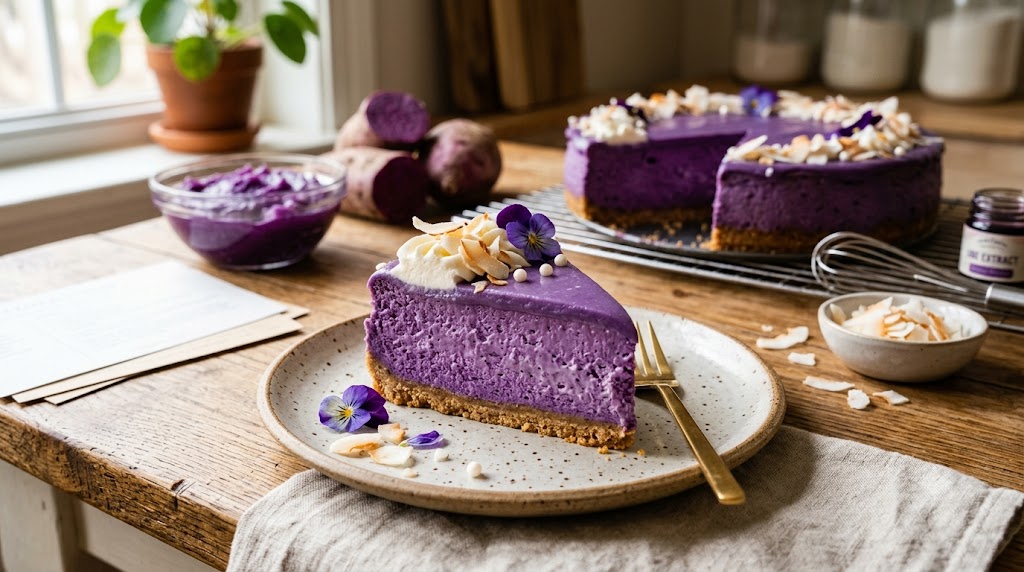
The first time most people see a slice of ube cheesecake, they pause before taking a bite. The color throws them off in the best way. It’s not food-dye purple. It’s a soft, almost dusky violet that looks like it belongs on a dessert cart in Manila, because it does. Then the fork goes in, and the flavor lands somewhere between vanilla bean, roasted pistachio, and a faint whisper of coconut. It’s not a novelty flavor stunt. It’s a real dessert with real roots, and once you understand what’s actually in it, it stops feeling mysterious and starts feeling like something you can make in your own kitchen this weekend.
What Is Ube Cheesecake?
Ube cheesecake is a cheesecake flavored and colored with ube, a purple yam that’s a staple ingredient in Filipino desserts. Bakers build it by blending ube halaya (a thick, sweet purple yam jam) or ube extract into a standard cream cheese filling, then baking or chilling it over a graham cracker or cookie crust. The result is a rich, tangy cheesecake with an earthy-sweet, vanilla-like flavor and a deep purple color that holds up whether it’s baked, no-bake, or cut into bars.
That’s the short version. Here’s everything else you need to know before you preheat your oven.
What Is Ube, Exactly?
Ube (pronounced OO-beh) is the Filipino name for Dioscorea alata, a tropical yam with skin that ranges from brown to nearly white and flesh that’s a deep violet-purple. It’s native to Southeast Asia and has been a staple crop and dessert ingredient in the Philippines for generations, most famously turned into ube halaya, a jam made by boiling and mashing the yam with sugar, milk, and butter. Its tubers are usually a deep violet-purple, though some varieties range from creamy white to plain white (source: Wikipedia, “Dioscorea alata”). The plant is genuinely distinct from other purple root vegetables, which is where a lot of confusion starts.
Ube vs. taro vs. purple sweet potato: what’s the difference?
| Root vegetable | Botanical family | Color | Flavor | Common confusion |
|---|---|---|---|---|
| Ube (purple yam) | Yam (Dioscoreaceae) | Deep violet throughout | Sweet, nutty, vanilla-like | Often mistaken for taro |
| Taro | Aroid (Araceae) | Pale lavender with flecks | Starchy, slightly nutty, less sweet | Often swapped for ube in stores |
| Purple sweet potato | Morning glory (Convolvulaceae) | Purple skin, white or purple flesh | Milder, more starchy | Sometimes labeled “ube” by mistake |
Dioscorea alata is commonly called purple yam, ube, violet yam, or water yam, and this root vegetable is frequently confused with taro even though the two plants aren’t related (source: Healthline). If a recipe or product calls itself “ube” but the color looks pale or grayish rather than a true violet, there’s a decent chance it’s actually taro.
What Does Ube Cheesecake Taste Like?
Ube on its own tastes sweet, earthy, and slightly nutty, with a flavor that people commonly compare to a mix of vanilla and pistachio, sometimes with a coconut note underneath. When it’s folded into a cheesecake, that flavor mellows and rounds out against the tang of the cream cheese. You get the richness of a classic New York cheesecake with a warmer, more dessert-forward finish, less citrusy than a plain cheesecake, more comforting than a fruit-topped one. It reads as familiar and new at the same time, which is a big part of why it’s become one of the most requested Filipino cheesecake variations on menus and home baking blogs alike.

Ube Halaya vs. Ube Extract vs. Ube Powder: Which One Do You Actually Need?
This is the part most recipes skip, and it’s the part that determines whether your cheesecake tastes like ube or just looks purple.
| Form | What it is | Best for | Watch out for |
|---|---|---|---|
| Ube halaya (jam) | Cooked, mashed ube with sugar, milk, and butter | Swirls, marbling, and adding real texture and depth | Sweetness varies a lot by brand |
| Ube extract/flavoring | A liquid flavor and color additive | Boosting color and flavor when halaya alone is too subtle | Many popular brands use artificial “identical flavor” rather than real ube |
| Ube powder | Dehydrated, ground purple yam | Rehydrating into a paste, or adding to dry ingredients | Needs to be rehydrated properly or it can taste chalky |
Here’s the detail that surprises a lot of home bakers: several of the most common ube extract brands sold in the U.S. don’t actually contain ube at all. They’re labeled “flavor” rather than “extract” for a reason, since they rely on a blend of artificial sweet potato and vanilla flavoring to mimic the taste and color. That’s not necessarily bad (they work, and they’re what most bakery-style recipes use), but if you want the truest flavor, combine a small amount of extract for color with real ube halaya or rehydrated ube powder for depth. Most experienced ube bakers do exactly this, using extract and real ube together rather than relying on either one alone.
The Best Ways to Make Ube Cheesecake
There isn’t one “correct” ube cheesecake. Depending on your time, your oven situation, and how you want to serve it, one of these four formats is going to fit better than the others.
| Style | Bake required? | Texture | Best for |
|---|---|---|---|
| Classic baked (NY-style) | Yes, 50 to 70 minutes | Dense, rich, sliceable | Holidays, dinner parties, make-ahead |
| No-bake ube cheesecake | No | Light, mousse-like | Hot weather, no oven access, quick prep |
| Ube cheesecake bars | Usually no-bake | Firm, sliceable into squares | Potlucks, easy transport, kid-friendly portions |
| Ube Basque cheesecake | Yes, at high heat | Custardy, slightly burnt top, jiggly center | A dramatic presentation with almost no decorating needed |
If you’ve never made a purple dessert before, start with the classic baked version below. It’s the most forgiving, and it teaches you the fundamentals you’ll reuse in the other formats.
How to Make Classic Baked Ube Cheesecake
What you’ll need:
- 1 ½ cups graham cracker crumbs
- 6 tablespoons melted butter
- 3 tablespoons sugar (for the crust)
- 24 oz (three 8-oz blocks) full-fat cream cheese, room temperature
- 1 cup granulated sugar
- 3 large eggs, room temperature
- ½ cup sour cream
- ½ cup ube halaya
- 1 to 2 teaspoons ube extract (adjust for color)
- 1 teaspoon vanilla extract
- Pinch of salt
Steps:
-
Build the crust. Mix graham cracker crumbs, melted butter, and sugar until it looks like wet sand. Press it into the bottom of a 9-inch springform pan. Bake at 325°F for 10 minutes, then let it cool while you make the filling.
-
Beat the cream cheese first, alone. This is the step people skip, and it’s the one that prevents lumps. Beat the room-temperature cream cheese by itself for a full minute before adding anything else.
-
Add sugar, then wet ingredients. Mix in the sugar, then the sour cream, ube halaya, ube extract, vanilla, and salt. Scrape the bowl often.
-
Add eggs last, and barely mix. Add eggs one at a time, mixing only until each one disappears into the batter. Overmixing at this stage is the number one cause of a cracked top.
-
Bake low and slow. Pour the batter over the cooled crust and bake at 325°F for 50 to 65 minutes, until the edges are set but the center still has a gentle wobble.
-
Cool it down gradually. Turn off the oven, crack the door, and let the cheesecake sit inside for an hour. This slow temperature drop is what keeps the top from splitting.
-
Chill for real. Refrigerate for at least 6 hours, ideally overnight, before slicing.
Why Cheesecakes Crack (and How Ube Makes It Easier, Not Harder)
Cracking almost always comes down to one of three things: overmixing air into the batter, baking at too high a temperature, or cooling the cake too fast. The good news is that ube halaya actually adds moisture and body to the batter, which makes ube cheesecake slightly more forgiving than a plain vanilla version. If you follow the low-and-slow bake and the gradual cool-down, you’re unlikely to see cracks at all. If one does show up, a spoonful of extra ube halaya swirled on top hides it completely, and it looks intentional.
Storage and Make-Ahead Tips
Ube cheesecake keeps well in the fridge for up to 5 days when wrapped tightly or stored in an airtight container. It also freezes well for up to 3 months. Wrap individual slices in plastic wrap, then foil, and thaw them in the fridge overnight before serving. Because it needs a long chill time anyway, this is one of the easier holiday desserts to make two or three days ahead of when you actually need it.
If you’re looking for other make-ahead options, our guide on no-bake cheesecake techniques on Ube 101 walks through more no-oven variations that work well alongside this one.
Tools and Ingredients That Make This Easier
A few specific products make the difference between a cheesecake that tastes vaguely purple and one that tastes genuinely like ube.
Ube extract gives you reliable color and a flavor boost when halaya alone isn’t strong enough. Butterfly Ube Flavoring Extract, 2 oz is one of the most widely used bakery-style options. If you’d rather use a smaller bottle for occasional baking, McCormick Ube Flavor Extract, 20ml is an easy-to-find alternative.
Ube halaya (jam) is what gives the cheesecake real depth instead of just color. Tropics Ube Halaya Purple Yam Jam, 12 oz is a widely available, consistent option that works well folded straight into the batter or swirled on top.
A proper springform pan matters more than people expect. A pan with a tight seal keeps butter from leaking out during baking. Fat Daddio’s 9-inch Anodized Aluminum Springform Pan is a favorite among home bakers and professional kitchens for its tight latch and even heating.
The Takeaway
Ube cheesecake isn’t complicated once you understand the ingredient behind it. It’s a real Filipino purple yam, not a food coloring trick, and it tastes like a warm mix of vanilla, pistachio, and coconut layered over classic cream cheese tang. Use real ube halaya for depth, a bit of extract for color and punch, bake low and slow, and cool it gradually. Whether you go with the classic baked version, a no-bake ube cheesecake, easy ube cheesecake bars, or a dramatic Basque-style top, the fundamentals stay the same. Pick the format that fits your schedule, and don’t skip the overnight chill.
If you make this, let us know which format you tried first. And if you’re building out a full Filipino dessert spread, keep exploring Ube 101 for more ideas that bring bold, real flavors to the table.
Frequently Asked Questions
What does ube taste like in cheesecake? Ube tastes sweet, earthy, and slightly nutty, often compared to a mix of vanilla and pistachio with a light coconut note. In cheesecake, that flavor mellows against the tang of the cream cheese, creating a dessert that feels rich and familiar rather than strange or overly sweet.
Is ube cheesecake the same as purple sweet potato cheesecake? No. Ube (Dioscorea alata) is a distinct species from purple sweet potato (Ipomoea batatas), with a different flavor, texture, and botanical family. Some products are mislabeled, so check that the ingredient list says “ube” or “purple yam” rather than “purple sweet potato” if authenticity matters to you.
Can I make ube cheesecake without ube extract? Yes. Ube halaya alone will give you real flavor and some color, though the shade will be lighter and more muted than cheesecakes made with added extract. Using halaya alone actually gives a more natural, less artificial-tasting result.
Where can I buy ube halaya or ube extract? Asian and Filipino grocery stores typically carry both, and they’re also widely available online through retailers like Amazon. Look for “product of the Philippines” on the label if you want the most traditional flavor profile.
Why did my ube cheesecake crack on top? Cracking is usually caused by overmixing the batter after the eggs go in, baking at too high a temperature, or cooling the cheesecake too quickly. Mix gently, bake low and slow at 325°F, and let the cheesecake cool gradually in the turned-off oven before refrigerating.
Do I need a water bath for ube cheesecake? Not necessarily. Many ube cheesecake recipes skip the water bath entirely by relying on a low oven temperature and a slow cool-down instead, which produces a similarly creamy texture with less risk of leaks.
How long does ube cheesecake last in the fridge? Properly stored in an airtight container, ube cheesecake keeps for about 5 days in the refrigerator. It also freezes well for up to 3 months if wrapped tightly in plastic wrap and foil.
What’s the difference between ube cheesecake bars and a full cheesecake? Ube cheesecake bars use the same filling and crust concept but are baked or set in a square or rectangular pan, then cut into individual squares. They’re generally easier to transport, portion, and serve than a full round cheesecake.
Can I make no-bake ube cheesecake without gelatin? Yes. Many no-bake ube cheesecake recipes rely on whipped heavy cream folded into the cream cheese mixture to set the texture, rather than gelatin. It won’t slice quite as cleanly as a baked version, but it sets firm enough to serve in the fridge or slightly frozen.
Is ube good for you? Ube is a nutrient-dense root vegetable, providing complex carbohydrates, dietary fiber, potassium, vitamin C, and anthocyanin antioxidants. That said, ube cheesecake itself is still a rich dessert made with cream cheese, sugar, and eggs, so treat the health benefits of raw ube separately from the nutritional profile of the finished cake.
References
- Wikipedia, “Dioscorea alata” — https://en.wikipedia.org/wiki/Dioscorea_alata
- Healthline, “7 Benefits of Purple Yam (Ube), and How It Differs from Taro” — https://www.healthline.com/nutrition/ube-purple-yam
- USDA FoodData Central — https://fdc.nal.usda.gov/
- National Center for Biotechnology Information (PMC), “Antioxidative Characteristics and Sensory Acceptability of Bread Substituted with Purple Yam (Dioscorea alata L.)” — https://www.ncbi.nlm.nih.gov/pmc/articles/PMC8339343/
