
This article is not available in this language yet
We haven't translated this guide into your selected language yet, but you can read the full original article in English.
Read Article in Englishপ্রায়শই জিজ্ঞাসিত প্রশ্নাবলী
What color is real ube?
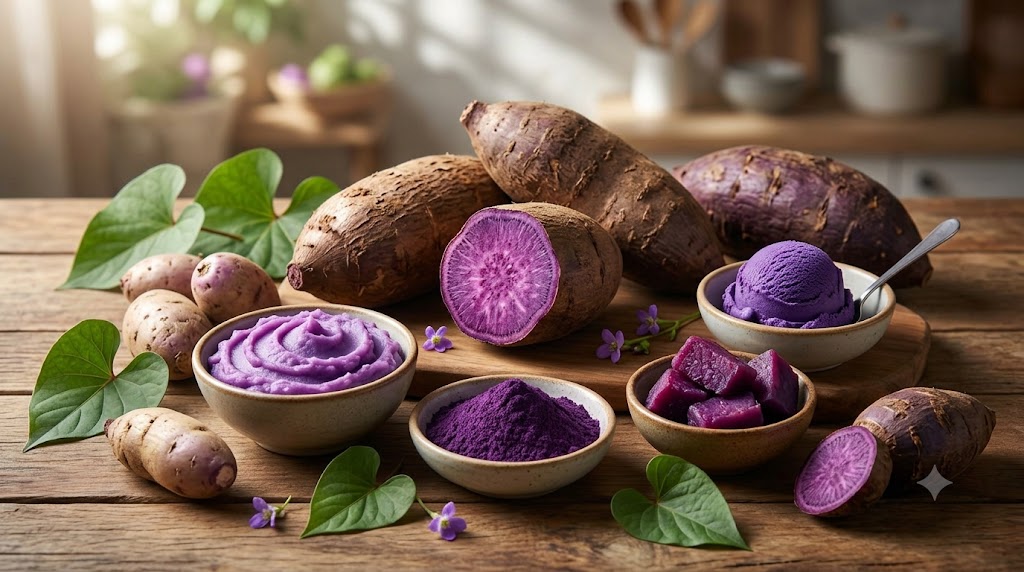
Real ube ranges from pale lavender to deep violet purple. The exact shade depends on the yam variety, the pH of the recipe, and how much heat it's exposed to during cooking.
Why does ube's purple color vary so much?
Ube's anthocyanin pigments respond to acidity, heat, and light, so recipes with more acid tend to look pinker while alkaline ingredients push the color toward blue purple. Growing conditions also affect how much anthocyanin a particular batch of ube contains.
Is ube naturally purple or is it dyed?
Ube is naturally purple thanks to anthocyanin pigments in the flesh itself. Some commercial ube extracts add extra food coloring for a brighter, more uniform shade, but the base plant is purple without any dye.
Why did my ube dessert turn out a different color than the recipe photo?
Small differences in pH, cooking time, and the specific ube product you used can all shift the final shade. This is normal with a natural pigment and doesn't mean anything went wrong.
Does baking soda affect ube's color?
Yes. Baking soda is alkaline and can push ube's anthocyanins toward a bluer or even grayish tone. Adding a bit of citric acid or lemon juice can help counter that shift.
Does cooking ube for a long time fade its color?
Yes. Anthocyanins break down faster with prolonged heat exposure, so long boiling or baking can dull ube's purple more than a quick steam.
Is ube powder or ube extract more purple?
Ube extract is often more vividly purple because some brands add food coloring for consistency. Pure ube powder relies only on the yam's natural pigment, so its color tends to be softer.
What pigment makes ube purple?
Anthocyanins, a group of water soluble plant pigments, give ube its purple color. These same pigments appear in blueberries, purple cabbage, and red dragon fruit.
Can I make ube's color brighter without artificial dye?
Adding a touch of acid, like lemon juice or citric acid, can help stabilize and slightly brighten ube's natural purple. Keeping cooking time short also helps preserve the deepest color.
Does ube color fade over time in storage?
Yes, exposure to light and heat gradually breaks down anthocyanins, so ube powder and prepared ube dishes can lose some vibrancy the longer they sit. Storing ube powder in a cool, dark, airtight container slows that fading.