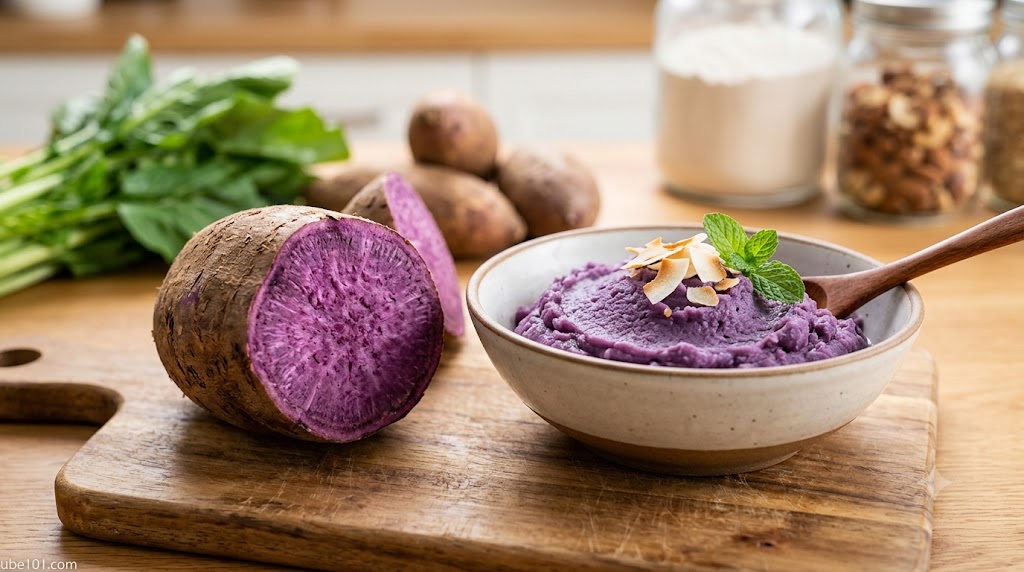
My aunt used to boil ube every Sunday and hand out chunks like candy to the kids in the family. Nobody questioned it back then. It was just food. Now that ube shows up in lattes and cheesecake, people ask me all the time if it’s actually good for you or just a pretty color with a lot of sugar attached. Good question, and the answer depends on what form you’re eating.
Plain, cooked ube is a nutritious root vegetable packed with fiber, potassium, vitamin C, and purple pigments called anthocyanins that carry real antioxidant power. Turn it into halaya, cake, or ice cream, and sugar and butter get added in, changing the whole nutrition picture. The yam itself is healthy. What you bake it into is a different story.
What’s Really Packed Into a Serving of Ube
A 100 gram serving of raw purple yam carries around 118 calories, 27.9 grams of carbohydrates, 1.5 grams of protein, and 4.1 grams of fiber, based on nutrient data drawn from USDA sources. That fiber number stands out most among common starchy roots. It beats what you’d get from white rice or plain pasta by a wide margin, and fiber keeps digestion moving and helps you stay full longer after a meal.
Potassium is where ube quietly shines. At roughly 816 milligrams per 100 grams, it sits close to what you’d get from a banana. Potassium helps regulate heart function and works against the effects of sodium on blood pressure, and most people in the US don’t get enough of it from their regular diet.
The Antioxidants Behind the Purple
Ube’s color comes from anthocyanins, plant pigments also found in blueberries and red cabbage. Research from USDA’s Agricultural Research Service points to purple sweet potato varieties, close cousins to ube in the antioxidant department, showing antioxidant activity that rivals berries known for their health reputation.
Antioxidants matter because they help fight off free radicals, unstable molecules linked to cell damage over time. That doesn’t turn ube into a miracle food, but it does mean the color you see is doing something real, not just sitting there for looks.
Vitamin C and B6, the Nutrients Nobody Talks About
Beyond fiber and potassium, ube brings a solid 17.1 milligrams of vitamin C per 100 grams, plus 0.29 milligrams of vitamin B6. Vitamin C supports your immune system and skin health, and B6 plays a role in brain function and mood. These two get buried under all the talk about color and sweetness, but they’re sitting in every plain serving.
Ube Nutrition Snapshot (Per 100g, Raw)
| Nutrient | Amount | What It Does |
|---|---|---|
| Calories | ~118 | Similar to other starchy roots |
| Fiber | 4.1g | Keeps digestion steady, fills you up |
| Potassium | 816mg | Supports heart function, balances sodium |
| Vitamin C | 17.1mg | Immune support, skin health |
| Vitamin B6 | 0.29mg | Brain and mood support |
| Protein | 1.53g | Low, not a real protein source |
Where the Health Story Changes
Here’s the part people skip over. Ube halaya, the sweet jam base behind most ube desserts, gets cooked with butter, sugar, condensed milk, and evaporated milk. A single serving can run close to 550 calories, with 39 grams of sugar and 37 grams of fat, based on nutrition breakdowns from Filipino recipe sites. That’s a completely different food than the plain root sitting in your pot.
So an ube latte or a slice of ube cake isn’t a health food just because the word ube is in the name. The yam brings real nutrition to the table. Sugar and butter usually cancel a good chunk of that out once it’s baked into a dessert.
Is Ube Safe for Pregnancy or Blood Sugar Concerns?
Cooked ube is generally seen as safe during pregnancy, and it offers fiber, potassium, and vitamin C worth having on a prenatal plate. Desserts made from it should stay occasional rather than daily, especially for anyone managing gestational diabetes. Talk to your doctor about your specific situation rather than relying on any food blog, mine included, for medical guidance.
For people watching blood sugar more broadly, plain cooked ube in a reasonable portion, paired with some protein, tends to fit better into a balanced plate than an ube dessert loaded with condensed milk.
So, Is Ube Actually Healthy?
Yes, in its plain form. Ube gives you real fiber, potassium, vitamin C, and antioxidant pigments backed by actual nutrient data, not just a purple reputation. What flips the answer is the form on your plate. Boiled ube is a solid choice. Ube cheesecake is a treat that happens to contain something nutritious buried inside it.
Want to see how ube stacks up against its most common lookalike? Check out our full comparison of ube vs purple sweet potato for a side by side look.
The Bottom Line
Ube earns its healthy reputation the honest way when it’s cooked plain, thanks to fiber, potassium, vitamin C, and anthocyanin antioxidants that show up in real nutrient data. That reputation doesn’t carry over automatically once ube turns into cake, jam, or a sweet drink, since sugar and butter tend to make up most of those calories instead. Enjoy the desserts for what they are, and lean on plain cooked ube when the health benefits are actually what you’re after.
Looking for ube recipes that lean more nutritious than dessert? Browse our full collection on Ube101 for ideas built around the yam itself.
A note on this article: nutrition needs shift person to person, especially during pregnancy or with a condition like diabetes. This piece is general information, not a stand in for advice from a doctor or registered dietitian.
