
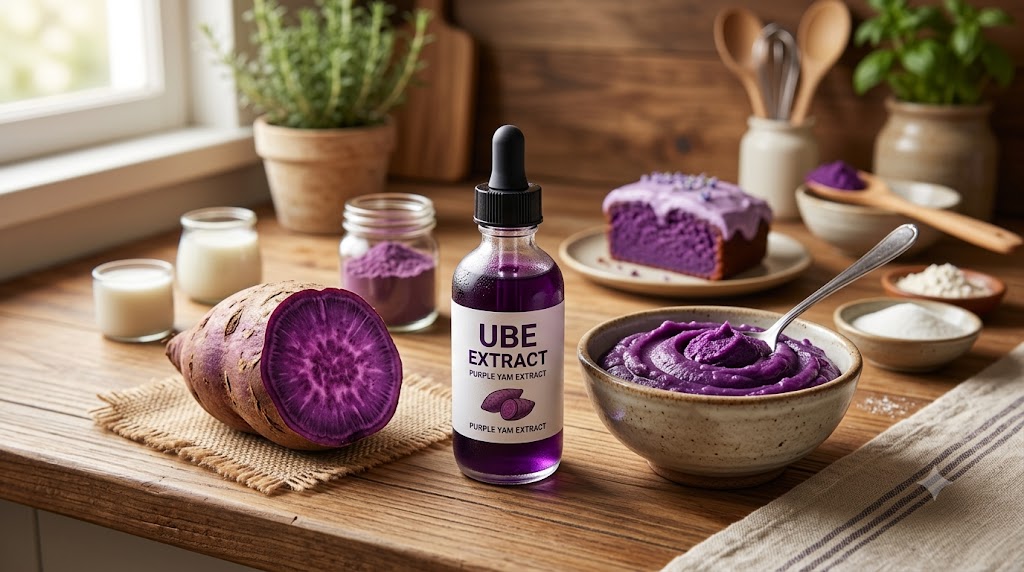
Walk into any Filipino bakery and look at the cakes in the display case. That deep, vivid, almost electric purple? That does not come from fresh ube alone. It almost certainly came from a small bottle of ube extract.
Ube extract is one of the most important ingredients in Filipino baking, and increasingly in American pastry shops, coffee bars, and home kitchens as ube has crossed over into the mainstream. T. Hasegawa USA named ube the 2024 Flavor of the Year (PR Newswire, December 2023), and that explosion in popularity brought ube extract from niche Asian grocery store shelves onto Amazon bestseller lists and Walmart store shelves.
But a lot of people buying ube extract are not entirely sure what they are working with, and the differences between brands matter more than most people realize.
The short answer: Ube extract is a concentrated liquid flavoring made from cooked purple yam (Dioscorea alata), combined with food coloring, glucose syrup, and flavoring agents. It adds ube flavor and vivid purple color to baked goods, drinks, and desserts without changing their texture. The two most widely available brands in the U.S. are McCormick Ube Flavor Extract and Butterfly Ube Flavoring. Use it at a 1:1 ratio in place of vanilla extract, or a few drops at a time for drinks and frostings.
What Is Ube Extract?
Ube extract is a liquid concentrate that delivers ube flavor and color to recipes. Here is how most commercial ube extract is made, according to Rice Life Foodie’s comprehensive guide to the ingredient.
Fresh purple yams are harvested and cleaned, then cooked by boiling or steaming until soft. The cooked yam is mashed or pureed, then goes through a filtration and extraction process that separates the liquid concentrate from the solid material. That liquid is then concentrated by heating to remove excess water, and in most commercial formulas, it is combined with glucose syrup (for sweetness), red and blue food coloring (to intensify the purple), natural or artificial ube flavoring, and a small amount of alcohol (which acts as a preservative and helps with extraction).
The result is a small, intensely colored bottle that can turn a plain cake batter deep purple with just a teaspoon or two.
What ube extract does NOT contain: dietary fiber, natural starch, or the full nutritional profile of fresh ube. It is a flavoring product, not a whole food. The nutrition is mostly in the glucose syrup.
Ube Extract vs Ube Powder: Which One Should You Use?
This is the most common question, and the answer depends on what you are making.
Use ube extract when: You want vivid purple color without changing the texture of your recipe. Extract is liquid and starchless, so it does not add body or moisture. Frostings, drinks, macarons, meringues, cocktails, and ice cream bases all benefit from extract because you get flavor and color without any textural interference.
Use ube powder when: You want more authentic ube flavor and a touch of extra moisture and starch in your baked goods. Cakes, cookies, breads, and pancakes often do better with ube powder because the natural starch from the root helps create a softer, moister crumb.
Use both together when: You want maximum ube character. Many experienced Filipino-American recipe developers, including the team at Bites by Bianca, recommend using ube extract plus one of the following: fresh ube, frozen ube, or reconstituted ube powder. The extract carries the color and intensity, while the whole-food form delivers the depth of flavor.
The Most Important Thing Nobody Tells You About Ube Extract
Here is the honest reality that many ube recipe articles skip over.
Most commercially available ube extract gets a large portion of its purple color from artificial dye, specifically red and blue food coloring. King Arthur Baking’s guide notes that ube extract is “made from steeped purple yam, food coloring, and natural flavors.” According to Rice Life Foodie, “almost all ube extract/flavor brands contain blue and red artificial coloring, which turns your food purple.”
This means the vivid, striking purple you see in ube desserts at coffee shops and bakeries is largely the result of dye, not the natural pigment of the ube plant. Real ube’s natural color is a muted, softer violet. The bright grimace purple is enhanced.
For most home baking and coffee drinks, this is perfectly fine. Food coloring approved by the FDA is safe for consumption, and the visual effect is part of what makes ube desserts so appealing. But if you specifically want to avoid artificial dye, there are options.
A dyeless version of McCormick ube extract exists, as noted by Bites by Bianca. Halo Pantry also makes a natural ube extract without synthetic coloring, though you need to use more of it to achieve color depth. These are harder to find and less commonly reviewed, but they are real options.
McCormick Ube Extract: The Most Widely Available Option
McCormick is the Filipino company (separate from the American McCormick spice brand) that has been producing ube flavoring for the domestic Filipino baking market for decades. Their ube flavor extract in the small 20ml bottles is what you will find in Filipino grocery stores across the U.S. and is the most commonly referenced brand in Filipino-American recipe blogs.
It is affordable, widely available, and delivers reliable purple color with ube-adjacent flavor. It is also one of the most artificial-tasting of the available options, because the flavor compounds lean heavily on glucose syrup and added flavoring rather than a high concentration of actual ube.
For casual home baking and lattes, it does the job. For recipes where ube flavor is central rather than just an accent, you may want to pair it with ube powder or ube halaya to deepen the actual taste.
McCormick Ube Flavor Extract on Amazon (affiliate link): McCormick Ube Flavor Extract 20ml
Butterfly Brand Ube Extract: The Baker’s Standard
Butterfly is a Philippine brand that specializes in extracts, food coloring, and baking essentials for Filipino cuisine. Their ube flavoring is one of the two most commonly recommended options in Filipino-American cooking communities (alongside McCormick), and it comes in both a 2oz home size and a larger 1-liter restaurant size.
Butterfly ube extract tends to deliver a bolder, more intense color than McCormick and is described by most reviewers as having a slightly stronger ube character. It is still a commercial product with food coloring and glucose syrup, but the flavor concentration is generally considered stronger per drop.
Little Epicurean, a food blog that covers Filipino-inspired recipes in detail, specifically recommends both Butterfly and McCormick as the two most accessible ube extracts in the United States, with Butterfly being the preferred choice for baked goods where color intensity matters.
Butterfly Ube Flavoring Extract 2oz on Amazon (affiliate link): Butterfly Ube Flavoring Extract 2 oz
Butterfly Ube Restaurant Size 1 Liter on Amazon (affiliate link): Butterfly Ube Purple Yam Flavoring Extract 1 Liter
How to Use Ube Extract in Recipes
The most common guidance across Filipino baking sites is to use ube extract at a 1:1 ratio in place of vanilla extract. King Arthur Baking confirms this: “You can easily swap out vanilla for ube extract at a 1:1 ratio in your dough or batter.”
Here are specific uses with dosing guidance.
In baked goods (cakes, cookies, brownies, bread): Start with 1 to 2 teaspoons per standard batch. Add to wet ingredients. Because the extract does not affect texture, you do not need to adjust your dry or wet ingredient ratios.
In ube lattes: Add 1 to 2 teaspoons to warm or steamed milk before adding espresso. Stir well. The extract dissolves easily in liquid. Start with less and add more to taste, as the flavor is concentrated.
In frostings and buttercream: Add 1 teaspoon per cup of frosting for color and flavor. The alcohol in the extract evaporates during mixing, leaving flavor and color behind.
In cocktails and mocktails: A few drops provide dramatic color. Start with half a teaspoon per drink and adjust.
In meringues and macarons: Fold in after whipping, because heat is not required and you want the color to remain vivid. Extract works better than powder here because it does not introduce texture.
One important note from Tasting Table’s guide: since the flavor is quite subtle compared to something like almond extract, “it is tough to go overboard.” You can always add more.
Where to Buy Ube Extract
Online: Amazon is the most reliable source for consistent availability. Both McCormick and Butterfly are sold there year-round. Sari Foods and other brands sell ube flavoring on Amazon as well.
Asian grocery stores: The Filipino section of any well-stocked Asian grocery store (H Mart, 99 Ranch Market) will typically carry Butterfly and McCormick ube extract in the baking aisle.
Filipino specialty stores: Seafood City, Island Pacific, and other Filipino supermarkets stock multiple ube extract brands at lower prices than Amazon, because these stores buy in volume from Philippine suppliers.
Walmart: Walmart has begun carrying ube extract in markets with larger Filipino-American populations, particularly on the West Coast. Availability varies by location.
Whole Foods: Occasional availability, particularly for premium natural ube flavoring products rather than traditional extract brands.
Ube Extract Substitutes
If you cannot find ube extract and need something right now, here are the practical options in order of preference.
Ube powder: The best substitute. Reconstitute with hot liquid and use in place of extract in baked goods. Color will be more muted. Flavor will be more natural.
Frozen grated ube: Found in Filipino grocery freezer sections. Thaw, cook if needed, and mash. More work but delivers authentic flavor.
Ube halaya (ube jam): Adds sweetness alongside flavor. Use in fillings, frostings, and swirl-ins where additional sweetness is acceptable.
Purple sweet potato puree: Not ube, and it tastes different. If you use it, call your dish a purple sweet potato recipe rather than an ube recipe, as Rice Life Foodie correctly notes. It will work as a color substitute but not as a flavor substitute.
For more recipe guides using ube extract in specific desserts and drinks, you can find full breakdowns at Ube 101.
Key Takeaways
Ube extract is the fastest, easiest way to add ube flavor and purple color to any recipe. McCormick and Butterfly are the two most accessible brands in the U.S., with Butterfly generally preferred for baked goods where color intensity matters. Most commercial ube extract contains artificial food coloring, which is fine for most uses but worth knowing if you are avoiding synthetic dyes. For best results, combine extract with ube powder or ube halaya to build a fuller, more authentic ube flavor.
References
- Tasting Table. “Ube Extract Vs Powder: What’s the Difference?” tastingtable.com. October 2024.
- King Arthur Baking. “Your Guide to Baking with Ube.” kingarthurbaking.com. May 2024.
- Rice Life Foodie. “Ultimate Guide to What Is Ube Extract.” ricelifefoodie.com. August 2024.
- Bites by Bianca. “The Ultimate Guide to Ube (Filipino Purple Yam).” bitesbybianca.com. August 2024.
- Little Epicurean. “Iced Ube Latte.” thelittleepicurean.com. April 2025.
- PR Newswire. “Ube Is the 2024 Flavor of the Year.” prnewswire.com. December 2023.
- Amazon product listings: McCormick Ube Flavor Extract, Butterfly Ube Flavoring Extract. amazon.com.
Najczęściej zadawane pytania
What is ube extract?
Ube extract is a concentrated liquid flavoring made from cooked purple yam (Dioscorea alata), combined with glucose syrup, red and blue food coloring, natural flavors, and a small amount of alcohol as a preservative. It adds ube flavor and vivid purple color to baked goods and beverages without affecting texture.
What is ube extract used for?
Ube extract is used to flavor and color cakes, cookies, bread, frostings, ice cream, lattes, cocktails, macarons, meringues, and any recipe where ube flavor is desired. It works especially well in drinks and frostings where texture cannot be altered.
Where can I buy ube extract?
Ube extract is available on Amazon (Butterfly and McCormick are the most widely stocked), in the baking aisle of Filipino and Asian grocery stores, at some Walmart locations, and at Filipino specialty stores like Seafood City and Island Pacific.
What is the difference between McCormick ube extract and Butterfly ube extract?
Both are commercial ube flavor extracts with artificial food coloring and glucose syrup. Butterfly is generally considered more concentrated in color and flavor per drop, making it the preferred choice for baked goods where deep purple is desired. McCormick is more widely available in mainstream stores and is slightly more mild.
How much ube extract do I use?
Use ube extract at a 1:1 ratio in place of vanilla extract in most recipes. For drinks, start with one teaspoon per serving and adjust. For frostings, one teaspoon per cup. Because the flavor is subtle, you can add more without worrying about over-flavoring.
Is ube extract the same as ube flavoring?
These terms are used interchangeably, though technically flavoring and extract can differ in how they are made. Most products sold as "ube extract" or "ube flavoring" in the U.S. (McCormick, Butterfly) are very similar in composition. Both contain glucose syrup, food coloring, and ube-derived flavoring.
Does ube extract have real ube in it?
Yes, but it also contains food coloring, glucose syrup, and added flavoring. The ube is concentrated through extraction, but the vivid purple color in most commercial extracts comes partly from artificial dye (red and blue food coloring), not purely from the ube's natural anthocyanins.
Can I use ube extract instead of ube powder?
Yes, but they behave differently. Ube extract does not affect texture. Ube powder adds moisture and starch. If a recipe calls for powder, extract alone will not replicate the textural benefit. If a recipe calls for extract, you can use reconstituted ube powder but the color will be less vivid.
Does ube extract expire?
Most commercial ube extract has a shelf life of one to two years. Store in a cool, dark place. The alcohol content helps preserve it. Once opened, it can last a year or more if kept properly.
Is ube extract at Walmart available?
Walmart stocks ube extract in select locations, particularly in areas with larger Filipino-American populations on the West Coast and in major metropolitan markets. Availability is inconsistent, so Amazon or a Filipino grocery store is a more reliable option.