
← Back to Reviews & Guides
Ube

Ube vs Taro: What's Actually the Difference?

Ube is naturally purple and sweet. Taro is pale and mild. They are not the same. Here is the full breakdown of taste, color, uses, and why the confusion happens.

Ube 101 Team ·
Ube vs Taro: What's Actually the Difference?
Font Size:

Here is something that trips up almost everyone, including people who work in food. You walk into a boba shop, point at the bright purple drink labeled “taro milk tea,” and think you are about to taste taro. You are probably not.

What you are likely tasting is either artificial coloring, ube powder, or a taro powder blend that gets its purple from added dyes. Real taro is not that purple. Not even close.

This confusion between ube and taro is one of the most widespread mix-ups in the current food world, and it is understandable because both words show up in the same dessert shops, both are tropical root vegetables, and both have been riding the same wave of Asian food culture making its way into mainstream American menus. But ube and taro are not the same plant, do not taste the same, and are not interchangeable in recipes.

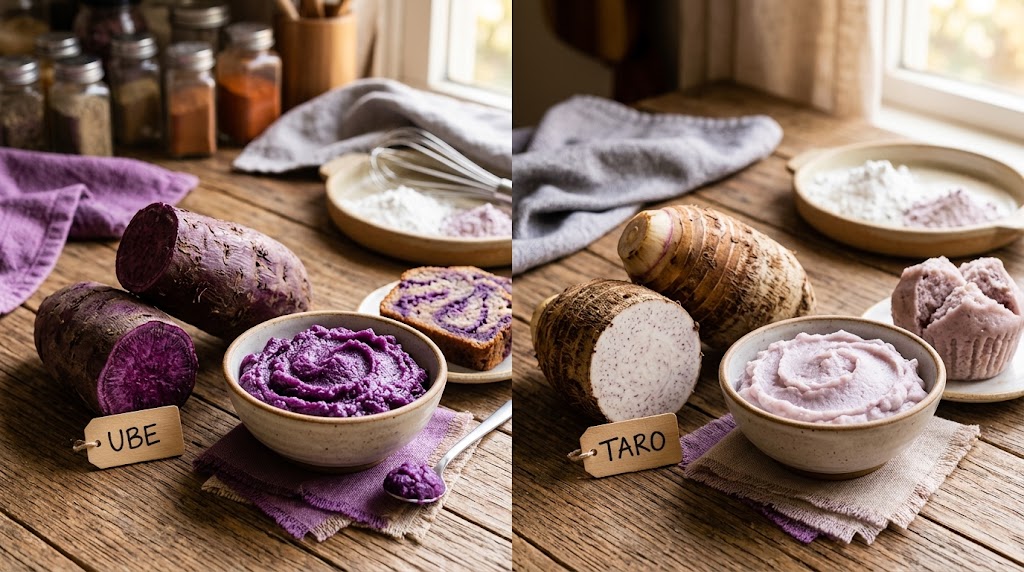
The direct answer: Ube (Dioscorea alata) is a true yam native to the Philippines with naturally deep purple flesh and a sweet, vanilla-nutty flavor. Taro (Colocasia esculenta) is a corm from the arum plant family with naturally white or pale cream flesh marked with small purple specks, and a mild, earthy, starchy taste. They come from completely different plant families and have almost nothing in common beyond being starchy tropical roots that sometimes appear in purple-colored food.


Where the Confusion Starts

The ube vs taro mix-up has one main source: the color purple.

When Filipino-American ube desserts started showing up on Instagram and TikTok in the mid-2010s, they were deeply, naturally purple. At the same time, taro bubble tea had already established itself across Asian-American communities, and while real taro is pale and cream-colored, most commercial taro powders are artificially colored purple or lavender for visual appeal.

A customer might see purple ice cream labeled “ube” at a Filipino bakery, then purple milk tea labeled “taro” at a bubble tea shop, assume they are related, and leave with a fundamental misunderstanding of both ingredients.

According to Datassential, ube grew 231% on U.S. menus over four years and consumer awareness reached 27% by 2026. As ube grew more visible, the confusion with taro grew alongside it, because many people first hear about “that purple ingredient” without being told which one they are dealing with.


Ube: The Naturally Purple Yam

Ube is a tropical yam originally from the Philippines. Its botanical name is Dioscorea alata, and it belongs to the Dioscoreaceae family, which makes it a true yam. The flesh inside a fresh ube root is a vibrant, deep violet color, sometimes streaked with white or light lavender. That purple is entirely natural, coming from anthocyanins, the same pigment compounds found in blueberries and purple cabbage.

In the Philippines, ube has been a staple of desserts and celebrations for centuries. It is the base for ube halaya (a creamy jam made with condensed milk and coconut milk), ube ice cream, ube cake, and countless other sweets.

The flavor of ube is sweet, creamy, and gently nutty. Most people describe it as a combination of vanilla, white chocolate, and pistachio, with a subtle earthiness. It is approachable and mild, which is why it works so well as a dessert ingredient.

In the U.S., fresh ube is genuinely hard to find. Raw ube also contains oxalates, which means it should always be cooked before eating. Most Americans encounter ube as ube powder, ube extract, frozen grated ube, or ube halaya from an Asian grocery store.


Taro: The Pale Starchy Root That Is Not Actually Purple

Taro (Colocasia esculenta) is a different plant family entirely, belonging to Araceae, also known as the arum family. It is one of the oldest cultivated food crops in human history, grown across Asia, Africa, the Pacific Islands, and the Caribbean for thousands of years. In Hawaii, poi is made from taro. In China and Taiwan, it shows up in both savory stews and sweet pastries. In West Africa, taro has been a dietary staple for millennia.

When you slice open a fresh taro root, the flesh is white or cream-colored, sometimes with very faint lilac or lavender undertones and tiny purple speckles. That is all. It is not vibrant. It is not violet. It is pale.

The flavor of taro is mild and slightly earthy, closer to a starchy potato with a very faint nuttiness than to any dessert ingredient. It is naturally low in sweetness, which is why taro in sweet applications (like bubble tea) almost always gets significant added sugar to create the sweetness consumers expect. Taro’s neutral character also makes it genuinely versatile, working in savory soups and curries just as well as in sweetened drinks.

So where does that beautiful purple taro milk tea color come from? Either artificial dye added to commercial taro powder, or ube added as a natural colorant, or a blend of both. Knowledgenuts.com put it plainly: “Real ube is already purple, so a dessert made with ube does not need coloring to get that look. Taro is naturally white or pale gray, but commercial taro products in Western markets are often tinted purple to look more vivid.”


Ube vs Taro: A Side-by-Side Comparison

FeatureUbeTaro
Scientific nameDioscorea alataColocasia esculenta
Plant familyDioscoreaceae (true yam)Araceae (arum family)
OriginPhilippinesSoutheast Asia, Pacific, Africa
Natural flesh colorDeep purple to violetWhite or cream with faint purple speckles
FlavorSweet, vanilla-nutty, creamyMild, earthy, starchy, slightly nutty
SweetnessNaturally mild-to-medium sweetLow, needs added sugar
Primary culinary useDesserts, sweet applicationsBoth savory and sweet
Typical forms in the U.S.Powder, extract, halaya, frozen gratedPowder, fresh corm, frozen, bubble tea
Natural color sourceAnthocyanins (natural pigments)Pale flesh, often artificially colored
Famous inFilipino cuisineHawaiian, Taiwanese, Chinese, West African cuisine
Texture when cookedSmooth, creamy, slightly starchySlightly drier, more crumbly, higher starch

Ube and Taro Comparison


Is Ube the Same as Taro?

No. The plants are not related, the flavors are not similar, and the natural colors are opposite. The only things they genuinely share are being tropical starchy roots and appearing together in Asian dessert menus.

According to myubebae.com, ube and taro “come from completely different plant families and taste nothing alike. You cannot substitute one for the other and get the same result.”

If a recipe calls for ube and you use taro instead, you lose the natural purple color, the vanilla-nutty sweetness, and the creamy texture that makes ube desserts distinctive. If a recipe calls for taro and you use ube, the result will be sweeter and more vibrantly colored than intended, and the starchy body that gives taro-based soups or poi their texture will be missing.


Taro vs Ube Taste: The Specific Differences

This is where most people’s questions really land. Not botany, but flavor.

Ube leads with sweetness. Even before you add any sugar or other ingredients, ube has a natural sweetness that taro simply does not have. That is the most immediate taste difference.

Ube has vanilla notes. Whether from specific flavor compounds in the root or the overall combination of its profile, ube consistently delivers something that reads as vanilla-adjacent on the palate. Taro does not.

Ube is creamier. When cooked and mashed, ube has a smooth, almost buttery quality. Taro is slightly drier and more grainy, which is one reason it works well as a thickener in savory dishes.

Taro is more neutral. This neutrality is actually taro’s strength. It absorbs flavors around it rather than asserting its own, which is why it works so well in both sweet milk tea (where it absorbs the added sweetness) and savory preparations (where it absorbs broth and spice).


Ube vs Taro in Boba Tea

This is the area where the confusion causes the most practical problems.

Most bubble tea shops serve “taro milk tea,” and the powder they use is typically a commercial taro powder mix. These mixes almost always contain sugar, milk powder, and artificial purple or lavender coloring. Some contain real taro. Many do not. The flavor is mild, sweet, and slightly milky. The purple color is largely artificial.

If a bubble tea shop serves “ube milk tea,” it should be using real ube extract, ube powder, or ube halaya to flavor and color the drink. The flavor will be noticeably sweeter and more vanilla-forward than taro. The color will be deeper and more vibrant.

When you see a vivid, deeply purple drink, that color is more likely ube (or ube-based coloring) than real taro. When a drink is a softer lavender or is clearly colored with dye, that is likely the taro powder most commercial shops use.


Which One Should You Use?

If you are baking desserts, making ice cream, or creating something that should be visually stunning and naturally sweet: use ube.

If you are making savory soups, stews, or dishes that need a starchy thickener with a mild flavor, or if you are making traditional taro-based preparations like poi or wu tao gao (taro cake): use taro.

Both are genuinely delicious. They are just designed for different jobs.

If you are curious about more flavor comparisons between popular ingredients and want to know which products to buy, Ube 101 covers the full landscape with honest reviews.


Key Takeaways

Ube is naturally purple, natively sweet, and belongs in desserts. Taro is naturally pale, mild and earthy, and works in both savory and sweet dishes. They come from entirely different plant families and taste nothing alike. The purple color in commercial “taro” drinks is usually artificial or ube-derived. And the next time someone points at a vibrant violet dessert and says “that’s taro,” you can gently, kindly set the record straight.


References

  1. Datassential. “What Is Ube and Why Is It So Popular?” datassential.com. May 2026.
  2. KnowledgeNuts. “Taro vs Ube: What Is the Difference?” knowledgenuts.com. June 2026.
  3. Maison Koko. “Ube vs Taro: What’s the Difference?” maisonkoko.com. July 2026.
  4. My Ube Bae. “Ube vs Taro: Taste, Differences, Uses.” myubebae.com. February 2026.
  5. WebstaurantStore. “What Is Ube vs a Purple Sweet Potato: Taste, Flavor, and More.” webstaurantstore.com.
  6. Healthline. “7 Benefits of Purple Yam (Ube), and How It Differs from Taro.” healthline.com.
  7. Food Network. “What Is Ube?” foodnetwork.com. May 2024.
  8. Fine Dining Lovers. “What Is Ube? Flavor, Uses, and Origins.” finedininglovers.com. October 2025.

Najczęściej zadawane pytania

What is the difference between ube and taro?

Ube is a true yam (Dioscorea alata) native to the Philippines with naturally deep purple flesh and a sweet, vanilla-nutty flavor. Taro (Colocasia esculenta) is a corm from a different plant family with pale, cream-colored flesh and a mild, starchy, earthy taste. They come from completely different botanical families and are not interchangeable in cooking.

Is ube the same as taro?

No. Ube and taro are different plants with different flavors, different botanical classifications, and different natural colors. Ube is naturally purple and sweet. Taro is naturally pale and mild. The confusion arises because both are tropical roots associated with purple-colored food in Asian and Asian-American cuisine.

Taro vs ube taste: which is sweeter?

Ube is significantly sweeter than taro. Ube has a natural vanilla-nutty sweetness even before any added sugar. Taro has very little natural sweetness, which is why taro milk tea and other taro sweet preparations require significant added sugar.

Is ube a taro root or a purple yam?

Ube is a purple yam, specifically Dioscorea alata. It is not taro and it is not a purple sweet potato, though it is often confused with both. It is a true yam that grows in tropical climates, particularly in the Philippines.

Why is taro milk tea purple if taro is not purple?

Commercial taro powder used by most bubble tea shops contains artificial purple or lavender food coloring, along with sugar, milk powder, and sometimes actual taro. Real taro is naturally white to cream-colored. The purple color comes from dye or from ube added as a natural colorant, not from taro itself.

Can you substitute ube for taro?

In most recipes, no. Ube is sweeter, creamier, and naturally purple, while taro is milder, drier, and pale. Swapping them changes the flavor, texture, and color of the dish. In some very sweet desserts where both would work, you can substitute, but the result will not be the same.

Which is healthier: ube or taro?

Both are nutritious root vegetables. Ube is higher in antioxidants (anthocyanins) due to its purple pigment and is a good source of Vitamin C, Vitamin A, and potassium. Taro is higher in dietary fiber than many root vegetables. Both are naturally gluten-free and vegan.

Does taro taste like ube?

No. Taro tastes mild, earthy, and starchy, similar to a subtle sweet potato without much sweetness. Ube tastes sweet, creamy, and nutty with vanilla notes. If you have tried one and expect the other to taste similar, you will be surprised.

Which is used in Filipino cuisine: ube or taro?

Ube is the iconic Filipino ingredient. Ube halaya, ube cake, ube ice cream, and ube pandesal are all Filipino classics. Taro is also used in Filipino cooking, particularly in savory dishes like sinigang and laing, but ube is the one at the center of Filipino dessert identity.

How do you tell ube apart from taro when buying?

Slice the root open. Ube flesh is deep purple or violet throughout. Taro flesh is white or cream with faint purple speckles. The skin of both is rough and brownish, which is where the visual similarity begins and ends. For packaged products, ube powder will specify "purple yam" or "ube," while taro will specify "taro" or "Colocasia."