
← Back to Reviews & Guides
Ube

Ube Powder: What It Is, How to Use It, Best Brands

Ube powder is the easiest way to cook with purple yam at home. Here is what to look for, how to use it in baking and drinks, and which brands are actually worth buying.

Ube 101 Team ·
Ube Powder: What It Is, How to Use It, Best Brands
Font Size:

You want to make an ube latte. Or an ube cake. Or those gorgeous purple pancakes you have been seeing on every food account you follow. You look up a recipe, and it tells you to use ube powder. Then you open Amazon and you find 47 different options with wildly varying prices, questionable ingredient lists, and zero clarity on which ones are actually real ube.

This article fixes that.

Ube powder (also called purple yam powder) is the most practical way most people in the U.S. will ever cook with ube. Fresh ube is nearly impossible to find outside of Filipino grocery stores, and even then it is seasonal. Ube powder solves all of that and, when it is good quality, delivers real ube flavor, real ube color, and real ube nutrition in a format that sits in your pantry for months.

The short answer: Ube powder is cooked, dehydrated, and ground purple yam (Dioscorea alata). The best versions are single-ingredient (just ube), slow-dried to preserve flavor and anthocyanins, and sourced from the Philippines. You can use it in cakes, lattes, pancakes, cookies, bread, ice cream, and smoothies. For most home bakers, ube powder is more practical and more authentic-tasting than ube extract.


What Is Ube Powder?

Ube powder is made from fresh purple yam that has been cooked, mashed, dried at low temperature, and ground into a fine powder. Good ube powder contains exactly one ingredient: ube (Dioscorea alata). That is it.

The best manufacturers slow-dry the ube at low temperatures to preserve the natural flavor compounds, the anthocyanin antioxidants that give it the purple color, and the nutritional content. Cheaper versions are spray-dried at high temperatures, which is faster and cheaper but strips away much of the aroma, flavor complexity, and nutritional value in the process.

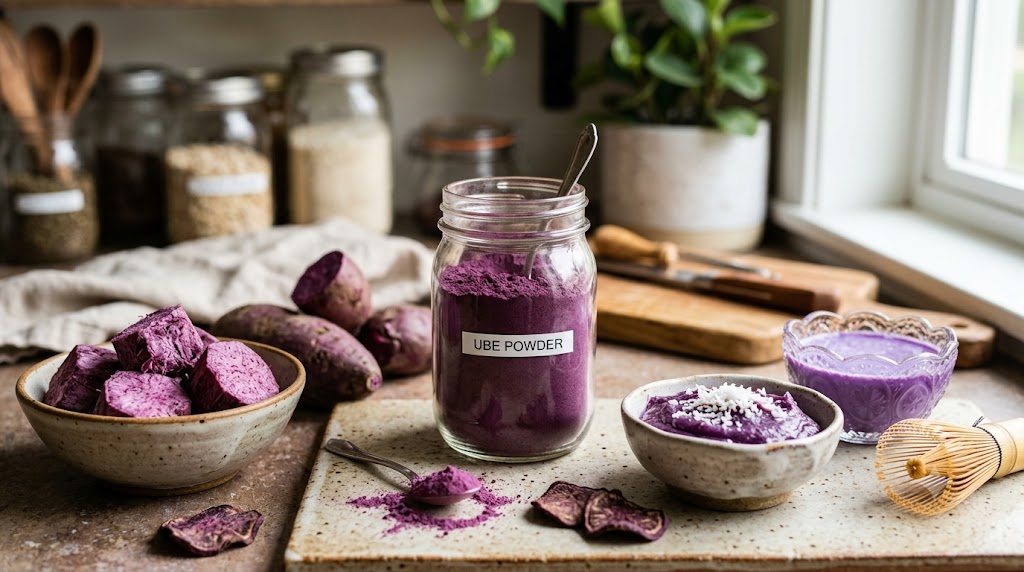
On the shelf or in a bag, ube powder looks like a fine, muted violet powder, somewhere between lavender and eggplant in color. It smells faintly sweet and earthy, with a gentle vanilla note. When you mix it with hot water, it becomes a deep natural purple.

Mashing Ube


Ube Powder vs Ube Extract: What Is the Actual Difference?

This is where most people get confused, because both are sold as “ube flavoring” and both show up in ube recipes. They are genuinely different products.

Ube powder is made from the whole ube root. It contains the starch from the yam, so it affects both the flavor and the texture of whatever you add it to. According to King Arthur Baking’s guide, ube powder “imparts a grainy texture to baked goods,” which can actually work in your favor in cookies and breads where a little heartiness adds to the experience. Powder also delivers more nutrients because you are using the whole food rather than a concentrate.

Ube extract is a liquid concentrate made by extracting flavor and color from cooked ube and then typically adding glucose syrup, food coloring, and other ingredients. According to Tasting Table, most ube extracts contain artificial purple and red dye, which is why they make baked goods so vivid. The flavor is more intense but also more artificial-tasting than good ube powder. Ube extract does not affect texture because it contains no starch.

FeatureUbe PowderUbe Extract
Made fromWhole cooked and dried ubeUbe concentrate plus additives
IngredientsSingle ingredient (ube only)Multiple (glucose, coloring, flavors)
FlavorNatural, mellow, more authenticIntense, sometimes artificial
ColorMuted violet (natural)Deep purple (often from added dye)
Texture impactYes (adds starch, moisture retention)No (liquid, no starch)
Shelf life12 to 24 months unopened1 to 2 years
Best forCakes, bread, lattes, cookies, pancakesFrosting, drinks, where no texture change is needed
NutritionFiber, antioxidants, vitaminsMinimal

For baked goods where you want authentic ube flavor and a soft, moist crumb, ube powder wins. For drinks and frostings where you want easy mixing and do not want texture changes, extract has the edge. Many experienced Filipino-American bakers use both together for maximum flavor and color.


How to Use Ube Powder

Before you use ube powder in most recipes, you need to reconstitute it. Here is how.

Reconstituting ube powder: Combine 1 part ube powder with 2 parts hot water (or hot liquid like coconut milk for more flavor). Stir until smooth and let it sit for 10 to 15 minutes before using. This creates a paste that behaves like fresh mashed ube in most recipes.

In cakes and cupcakes: Add one half to one cup of reconstituted ube powder to your batter. It pairs especially well with coconut or cream cheese frosting. The natural starch in the powder will make your cake slightly denser and more moist, which is a good thing in a chiffon or layer cake.

In lattes and drinks: Whisk one to two teaspoons of ube powder directly into hot or warm milk until dissolved. Add espresso or tea of your choice. For cold drinks, dissolve the powder in a small amount of warm water first, then add cold milk and ice.

In pancakes and waffles: Mix two to three tablespoons of ube powder into your dry ingredients. The powder will give the batter a natural purple tint that deepens when cooked.

In cookies and bread: Add two to four tablespoons to your dough or batter. King Arthur Baking specifically recommends ube powder (rather than extract) for their Ube White Chocolate Macadamia Sourdough Cookies, noting that the texture “imparts a delightful heartiness.”

In ice cream: Blend reconstituted ube powder into your ice cream base before churning. The natural starch helps create a creamier texture in no-churn ice cream recipes.

Important note: Ube powder does not deliver the vivid purple color that ube extract does. If you want that striking, deep violet color you see in photos, you may need to add a small amount of ube extract alongside the powder, or use good quality powder plus a few drops of natural purple food coloring.


What to Look for When Buying Ube Powder

Not all ube powders are what they claim to be. According to My Ube Bae’s 2026 quality guide, the market is “flooded with products labeled ube powder, but many of them are artificially colored taro, purple sweet potato, or even just food dye with a trace of real ube for flavor.”

Here is how to tell the difference between real ube powder and a fake:

Check the ingredients list. Real ube powder contains one ingredient: ube, or purple yam, or Dioscorea alata. If you see maltodextrin, modified starch, artificial coloring, or “natural flavor” as separate additions, you are looking at a blend, not pure ube powder.

Look at the color. Genuine ube powder is a muted, natural violet, not neon purple. If a powder looks fluorescent, it has been enhanced with artificial dye. According to My Ube Bae, “if a powder looks fluorescent neon purple, it has been enhanced with food coloring.”

Smell it. Good ube powder smells earthy and faintly sweet, with a vanilla-adjacent note. If it smells chemical or has no scent at all, the natural aromatic compounds have been stripped out during processing.

Price as a signal. As noted in a 2026 buying guide, genuine ube cultivation and processing is labor-intensive. Powder priced below $5 for 100g is almost certainly adulterated or extremely low quality. Premium single-ingredient ube powder typically runs $22 to $35 per 100g for small-batch artisan versions.


Here are verified, purchasable ube powder products available on Amazon, with honest notes on each.

Sari Foods Ube Powder is one of the most widely recommended ube powders for home bakers in the United States. It is made from real dehydrated purple yam, consistently available on Amazon, and is used by Filipino-American food bloggers across many published recipes. It is the standard recommendation for those new to cooking with ube powder.

You can find Sari Foods Ube Powder on Amazon here: Sari Foods Co Natural Non-GMO Ube Purple Yam Powder

Anthony’s Organic Purple Yam Powder is another option that is USDA Organic certified, gluten-free, non-GMO, and tested for purity. It is finely milled and dissolves well in liquids. Available on Amazon in multiple sizes.

You can find Anthony’s Organic Purple Yam Powder on Amazon: Anthony’s Organic Purple Yam Powder

Both brands are available with Prime shipping and represent a genuinely clean option compared to the mystery powders flooding the ube section.


Ube Powder Uses: What You Can Make With It

Once you have a bag of good ube powder, here is what it can do.

Desserts: Ube cake, ube halaya (purple yam jam), ube ice cream, ube cookies, ube cheesecake, ube brownies, ube mochi.

Breakfast: Ube pancakes, ube waffles, ube overnight oats, ube smoothie bowls.

Drinks: Ube latte, ube bubble tea, ube hot chocolate, ube milkshake.

Bread and pastry: Ube pandesal (Filipino bread rolls), ube loaf, ube buns, ube croissants.

Savory (less common but possible): Ube pasta, ube gnocchi, ube mashed potato.

For a full recipe breakdown of every ube dessert category and how they taste, you can browse the ube recipe guides at Ube 101.


Storing Ube Powder

Store your ube powder in an airtight container in a cool, dry place away from light. An unopened bag typically lasts 12 to 24 months. Once opened, transfer to a sealed glass jar and use within six months for best flavor and color intensity. Do not store near the stove or in a humid cupboard as moisture will cause the powder to clump and lose potency.


Key Takeaways

Ube powder is your most practical, most versatile, and most authentic option for cooking with ube in the United States. Choose single-ingredient powder with no additives, look for a muted natural violet color (not neon), and store it properly. For baked goods, reconstitute it with hot liquid before use. For drinks, dissolve in warm liquid first. Pair with ube extract if you want deeper color without adding more powder.


SEO Metadata

  • Title tag: Ube Powder: What It Is, How to Use It, Best Brands
  • Meta description: Ube powder is the easiest way to cook with purple yam at home. Here is what to look for, how to use it in baking and drinks, and which brands are actually worth buying.
  • URL slug: ube-powder
  • Excerpt: Ube powder is the easiest way to cook with purple yam at home. This guide covers what to look for, how to use it in baking and drinks, and which brands are actually worth buying.

References

  1. King Arthur Baking. “Your Guide to Baking with Ube.” kingarthurbaking.com. May 2024.
  2. Tasting Table. “Ube Extract Vs Powder: What’s the Difference?” tastingtable.com. October 2024.
  3. My Ube Bae. “Best Ube Powder in 2026: How to Choose the Right One.” myubebae.com. April 2026.
  4. Unlimited Recipes. “Ube Powder Vs. Ube Extract.” unlimited-recipes.com. January 2024.
  5. Chewco. “How to Use Ube Powder.” chewco.co.
  6. Plantin / Alibaba. “How to Choose the Best Ube Powder Extract: Buying Guide 2026.” plantin.alibaba.com. January 2026.

Najczęściej zadawane pytania

What is ube powder?

Ube powder is dehydrated, ground purple yam (Dioscorea alata), made by cooking fresh ube, drying it at low temperature, and milling it into a fine powder. It retains the natural flavor, color, and nutritional content of the yam. The best versions contain only one ingredient: ube.

What are the best uses for ube powder?

Ube powder works well in cakes, pancakes, waffles, cookies, bread, ice cream, lattes, smoothies, and overnight oats. It is most effective in baked goods where its natural starch improves moisture retention and texture.

How is ube powder different from ube extract?

Ube powder is made from the whole dried ube root and contains natural starch that affects texture. Ube extract is a liquid concentrate with added glucose syrup, food coloring, and artificial flavors. Powder delivers more authentic flavor and nutrition. Extract delivers more vivid color and easier mixing.

What is the best ube powder to buy?

For most home bakers, Sari Foods Ube Powder and Anthony's Organic Purple Yam Powder are the most accessible quality options on Amazon. Look for single-ingredient products with no added colorings, starches, or artificial flavors.

What is purple yam powder?

Purple yam powder is the same as ube powder. Both terms refer to dehydrated, ground Dioscorea alata. The names are used interchangeably.

How do I use ube powder in baking?

Reconstitute ube powder by combining 1 part powder with 2 parts hot liquid (water, coconut milk, or whole milk). Let it hydrate for 10 to 15 minutes, then use like mashed ube in your recipe. For most cakes, one half to one cup of reconstituted powder is sufficient.

Does ube powder need to be refrigerated?

No. Ube powder is shelf-stable. Store it in an airtight container in a cool, dry place. Refrigeration is not necessary but can extend shelf life slightly.

Is ube powder the same as ube flavoring?

Not always. Some products marketed as "ube flavoring powder" are blends that include artificial coloring, taro starch, or other fillers alongside actual ube. Pure ube powder has one ingredient: ube. Always check the label.

Can I substitute ube powder for ube extract?

Yes, with adjustments. Ube powder adds texture and starch that extract does not. To substitute, reconstitute the powder first and use a ratio of approximately 2 to 3 tablespoons of reconstituted powder per teaspoon of extract called for. Note that the color will be more muted without additional coloring.

Where can I buy ube powder?

Ube powder is available on Amazon, in Filipino and Asian grocery stores, at some Whole Foods locations, and increasingly in mainstream grocery chains. Online is the most reliable source for consistent quality.