
← Back to Reviews & Guides
Ube

Ube Macarons: What Flavor Are They and Where to Find Them

Ube macarons combine French macaron technique with Filipino purple yam flavor. Here is what they taste like, the best filling options, and where to find them.

Ube 101 Team ·
Ube Macarons: What Flavor Are They and Where to Find Them
Font Size:

French macarons are already fussy, delicate, and demanding. Add ube into the process and you are working with one of the most technically precise pastry forms in Western baking, plus a flavor that is subtle enough to disappear if you do not handle it carefully.

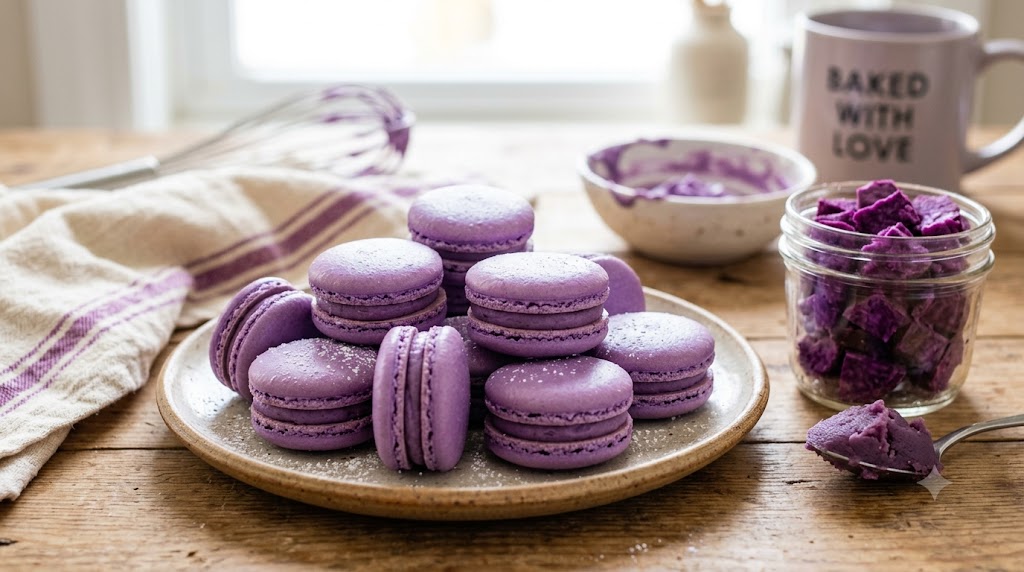
When ube macarons are done well, they are extraordinary. The shell is slightly crisp, then chewy. The filling is creamy and sweet. And the flavor combines the nuttiness and warmth of Filipino purple yam with the buttery richness of macaron buttercream or ganache in a way that makes you take a second bite before you have finished the first.

Quick answer: Ube macarons are French macarons flavored with ube (Filipino purple yam), typically in the filling and sometimes the shell as well. They taste mildly sweet, creamy, and vanilla-nutty with the characteristic ube flavor profile. The shell is purple from ube extract or food coloring. The filling is usually ube buttercream or ube ganache.


What Do Ube Macarons Taste Like?

Ube macarons taste like a combination of a classic macaron (sweet, almond-based, slightly chewy) and the warm vanilla-nutty flavor of ube. The almond flour in the macaron shell actually complements ube’s nuttiness in an unexpected but natural way, because both have a similar gentle, roasted quality.

The filling drives most of the ube flavor. A well-made ube buttercream filling uses real ube halaya or ube extract blended with butter and powdered sugar. The best versions use ube halaya because it provides more authentic flavor and a natural sweetness that reduces the need for additional sugar.

The color of ube macarons can range from soft lavender to vivid violet, depending on how much ube extract is used. The natural color from ube alone tends to be a soft, muted purple. Adding extract pushes it toward the photogenic deep violet that makes these macarons so visually striking.


The Ube Macaron Filling Options

Ube buttercream: The most common filling. Unsalted butter whipped with powdered sugar and ube halaya or ube extract. Rich, sweet, and strongly ube-flavored. The easiest to make at home.

Ube white chocolate ganache: White chocolate melted with ube halaya and a small amount of cream. Slightly denser and more complex than buttercream, with the white chocolate amplifying ube’s creamy notes.

Ube cream cheese filling: Cream cheese blended with ube halaya. The tanginess of cream cheese provides contrast against ube’s sweetness in a way that makes the filling feel less one-dimensional.


Making Ube Macarons at Home

Macarons require precision. Age your egg whites (leave them uncovered in the refrigerator for 24 hours to reduce moisture), sift the almond flour twice, and follow the macaronnage technique (folding the batter until it falls off the spatula in a ribbon) carefully.

For the ube color in the shell, add a small amount of ube extract or gel food coloring (purple) to the meringue before folding in the almond flour mixture. Keep it minimal to avoid affecting the meringue structure.

For the filling, the simplest and most flavorful option is ube halaya beaten with softened butter until fluffy. This requires no additional powdered sugar if the halaya is sweet enough.


Where to Find Ube Macarons

Filipino-French fusion patisseries in cities with significant Filipino communities make ube macarons. In the San Francisco Bay Area, Los Angeles, and New York, specialty bakeries with Filipino ownership or influence often include ube macarons in their rotation.

Etsy bakers and Filipino-American home bakers who sell through Instagram and local markets are another excellent source for ube macarons, often made with more authentic ingredients than commercial operations.


Key Takeaways

Ube macarons combine French pastry technique with Filipino flavor tradition. They taste mildly sweet, creamy, and nutty with warm ube character in the filling and a chewy almond shell. The best versions use ube halaya in the filling rather than just extract. Look for them at Filipino-French patisseries, specialty bakeries, and Instagram bakers. For full ube guides, visit Ube 101.