
← Back to Reviews & Guides
Ube

What Does Ube Taste Like? (The Honest Answer)

Ube tastes like a soft mix of vanilla, pistachio, and white chocolate with a gentle earthiness. Here is what to expect from every form of ube.

Ube 101 Team ·
What Does Ube Taste Like? (The Honest Answer)
Font Size:

You are standing in front of a purple cake, a lavender latte, or a bright violet scoop of ice cream, and someone tells you it is ube. You take a bite or a sip, and something warm and quietly familiar happens on your tongue, but you cannot quite name it.

That is what ube does to most people the first time.

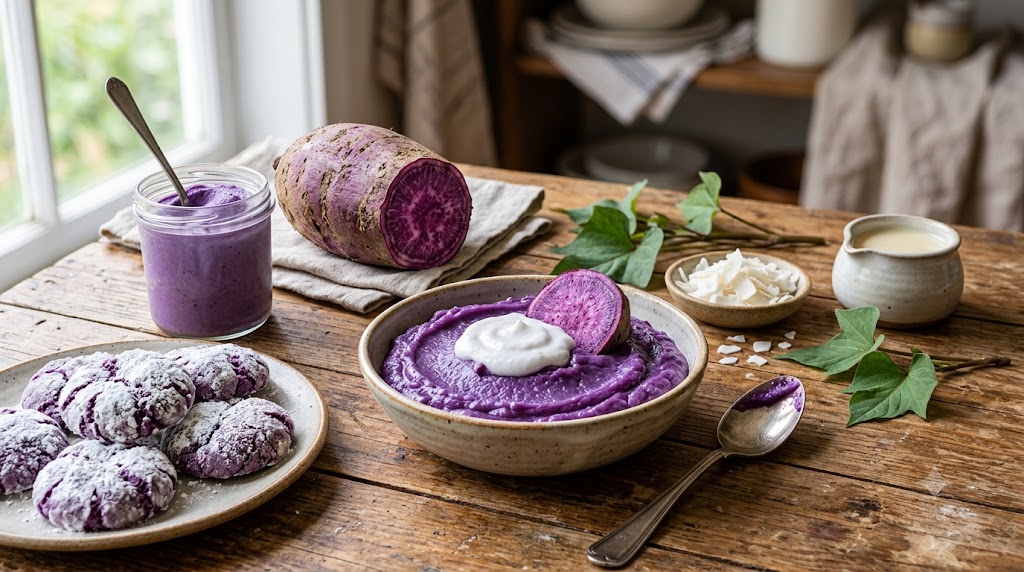
Ube (pronounced OO-beh) is a purple yam native to the Philippines, where it has been a beloved part of Filipino cuisine and dessert culture for centuries. Its scientific name is Dioscorea alata. It is not taro. It is not a purple sweet potato. It is its own thing entirely, and once you understand its flavor, you will never mix it up with anything else again.

The direct answer: Ube tastes mildly sweet with a creamy, nutty character. The closest comparison most people reach for is a combination of vanilla and white chocolate, with a subtle hint of pistachio or toasted hazelnut. It has a gentle earthiness underneath, but the dominant impression is soft, warm, and dessert-ready. Food writer and culinary school graduate Steph Coelho at Taste of Home described the aroma as hitting her “all at once” with almond, vanilla, and coconut extract, and the taste as “floral, nutty and subtly earthy with notes of caramelized white chocolate.”

That description is one of the most accurate you will find anywhere.


The Ube Flavor Description, Layer by Layer

Ube does not hit you over the head. It is a gentle flavor that reveals itself in layers, which is one reason it works so beautifully in desserts where other, stronger flavors would compete.

The first thing you notice is a light sweetness. Not the sharp sweetness of artificial flavoring or the heavy sweetness of processed sugar. Something quieter, almost milky. King Arthur Baking describes it as “earthy with a milky flavor reminiscent of white chocolate, notes of coconut, rich nutty pistachio, and aromatic vanilla.” That combination of creaminess and nuttiness is what makes ube so hard to describe but so easy to enjoy.

The second layer is the nuttiness. Nicole Ponseca, owner of two Filipino restaurants in New York City, told Mic that ube tastes like “an amalgamation of vanilla with the nuttiness of pistachio.” Michael Tsang, co-founder of Soft Swerve ice cream shop in New York, put it this way when speaking to Greatist: “a slightly nutty flavor and a hint of chestnut.” Both descriptions are accurate, and neither is complete on its own. The nuttiness is not strong or roasted. It is gentle, almost background.

The third layer is earthiness. Not muddy, not heavy, but a faint root-vegetable quality that grounds the sweetness and keeps it from being cloying. This is what gives ube its character.

Put all three together and you get a flavor that is approachable, warm, mildly sweet, gently nutty, and subtly complex in a way that makes people want another bite.


What Is Ube Flavor Like Compared to Familiar Things?

If you have not tried ube before, these comparisons might help you calibrate your expectations.

Ube tastes a bit like vanilla, but warmer and earthier. If regular vanilla extract tastes bright and sharp, ube tastes like the soft version of that, rounded out with something nutty.

Ube reminds some people of pistachio ice cream, but milder and creamier. The nuttiness in ube is less toasted than pistachio and more milky.

Ube shares some character with white chocolate, particularly its creaminess and the way it sits on the palate. But ube is not as sweet, and it has an earthiness that white chocolate does not have.

Ube is sometimes compared to taro (the root used in boba tea), but they taste nothing alike. Taro is much more neutral, slightly earthy, and starchy. Ube is genuinely sweet and dessert-ready. The comparison only comes up because people often see both as purple ingredients.


The Ube Taste Profile: A Quick Reference Table

Flavor NoteIntensityClosest Comparison
VanillaMediumSoft, milky vanilla
NuttinessMildPistachio, white chocolate
EarthinessSubtleRoot vegetable base
SweetnessMild to mediumNot sugary, naturally soft
CoconutVery subtleBackground note, aroma more than taste
CaramelTraceAppears when cooked or baked

Does Ube Taste Different in Different Forms?

Yes, and this matters a lot for setting your expectations.

Fresh ube: The most honest, most natural version. The sweetness is real but understated. One food scientist who bought fresh ube to make ube halaya at home noted that mashed fresh ube tasted “like potato, earthy, very slightly sweet, but didn’t taste of vanilla or nuts whatsoever.” The natural flavor becomes more complex after cooking and is significantly enhanced when paired with coconut milk and condensed milk.

Ube powder (dehydrated purple yam): Adds ube color and a gentle flavor to baked goods. More subtle than extract. The flavor is closer to the natural root, mildly nutty and earthy.

Ube extract: The most flavor-concentrated form. McCormick and Butterfly Brand both sell ube extract, and it can taste noticeably more artificial and sweeter than fresh or powdered ube. When a coffee shop gives you an ube latte that tastes almost perfume-sweet, it is likely using extract heavily. King Arthur Baking notes that ube extract delivers “an intense ube flavor and bold purple color,” which is exactly what it is designed to do.

Ube halaya (ube jam): What most people mean when they say ube tastes like vanilla and coconut. The jam is made by cooking ube with condensed milk, butter, and coconut milk. These added ingredients amplify ube’s natural notes dramatically. This is the form most commonly used as a base for Filipino desserts and is what people are often tasting when they say ube is “incredible.”


Why Does Ube Taste Purple?

That sounds like a strange question, but ube’s color and flavor are connected in a meaningful way. The deep purple comes from anthocyanins, the same antioxidant pigments found in blueberries and purple cabbage. According to Healthline, these anthocyanins are not just cosmetically interesting. Research has linked them to reduced blood pressure, anti-inflammatory effects, and protection against certain types of cell damage.

The intensity of ube’s purple tells you something about its anthocyanin concentration. Deeper purple means more of these compounds. And while anthocyanins do not have a strong taste themselves, they are a marker of the same soil and growing conditions that contribute to ube’s distinct flavor.


Ube Flavor in Real Filipino Desserts

The best way to understand what ube actually tastes like is to try it in the form it was designed for.

Ube halaya: The classic. A creamy, jam-like spread made from mashed ube, coconut milk, condensed milk, and butter. This is ube at its most celebrated, sweet and rich with a soft purple color.

Ube ice cream: Often the first encounter for Americans. Creamy, faintly nutty, with vanilla undertones. Brands like Magnolia (a Filipino ice cream staple) and the growing number of Asian-American ice cream shops in the U.S. make excellent versions.

Ube cake (chiffon or layer): Light, moist, and subtly sweet. The ube halaya filling adds richness. Filipino bakeries like Goldilocks and Red Ribbon have been making this style of cake for decades.

Ube pandesal (ube bread roll): A Filipino bread enriched with ube that gives the roll a soft purple tint and a gentle sweetness. Often filled with cream cheese, which pairs extremely well with ube’s mellow flavor.

Ube latte: Espresso with steamed milk and ube syrup or extract. The ube here adds sweetness, color, and a vanilla-adjacent flavor that works surprisingly well with coffee’s bitterness. Starbucks has offered ube in its Philippines locations and has experimented with it in the U.S. market.


What Does Ube Flavor Pair Well With?

Understanding ube’s flavor also means understanding what it loves to sit next to.

Coconut is ube’s most natural partner. The two grew up together in Filipino cuisine and their flavors genuinely complement each other, both creamy, both subtly sweet, both tropical.

Vanilla works because it shares ube’s warmth without competing with it. Many ube desserts include both, and the combination tastes more layered than either alone.

White chocolate brings out the creaminess in ube and lets the nutty notes shine.

Cream cheese provides a tangy contrast that balances ube’s sweetness without overpowering it. Ube cream cheese bread is one of the best examples of this pairing done well.

Coffee is a newer pairing but one that works. The bitterness of espresso and the sweetness of ube create an interesting contrast, especially with oat milk to bring additional creaminess.

If you want to explore more flavor pairings and product reviews across all things ube, you can find detailed guides at Ube 101.


Is Ube Flavor Natural or Artificial?

This depends entirely on what you are buying. Fresh ube and ube powder are natural products derived directly from Dioscorea alata, the purple yam. The flavor is real and comes from the compounds within the root itself.

Ube extract is a different story. Most commercially available ube extracts, including those from McCormick and Butterfly Brand, combine actual ube with food coloring, natural flavors, and sometimes vanillin (synthetic vanilla). They are effective for baking and beverages, but the flavor they deliver is more intense and less nuanced than fresh or powdered ube.

When you taste an ube product and think it tastes a bit too sweet or a bit perfume-like, it is almost certainly made with extract. When you taste something gently sweet, earthy, and layered, it is probably made with real ube or good ube powder.


The Ube Trend and Why It Matters

T. Hasegawa USA, one of the top ten food and beverage flavor manufacturers in the world, named ube its Flavor of the Year for 2024 (PR Newswire, December 2023). Monin, the premium syrup company, did the same. Datassential reported that ube grew 231% on U.S. menus over four years and is projected to grow another 48% through 2027. Consumer awareness rose from 15% in 2021 to 27% by 2026, meaning more than one in four Americans now know what ube is.

This is not a passing trend. It is a genuine crossover of Filipino-American food culture into the mainstream, driven by its natural beauty (that purple color), its genuinely pleasing flavor, and its versatility in the kinds of photogenic food that spreads on social media.


Key Takeaways

Ube tastes like a mellow combination of vanilla, white chocolate, and pistachio, with a gentle earthiness that keeps it grounded. The flavor is never sharp or aggressive. It is soft, warm, and dessert-ready in a way that makes it easy to love.

Fresh ube is the most honest version, but ube halaya shows off its full potential. Ube extract can be intense and sweet, while ube powder sits in between. If you want the truest ube flavor experience, find ube halaya at a Filipino bakery or Asian grocery and go from there.


References

  1. Coelho, Steph. “What Is Ube and What Does It Taste Like?” Taste of Home. Updated May 2026. tasteofhome.com.
  2. King Arthur Baking. “Your Guide to Baking With Ube.” kingarthurbaking.com. May 2024.
  3. Food Network. “What Is Ube?” foodnetwork.com. May 2024.
  4. Mashed. “What Is Ube and What Does It Taste Like?” mashed.com.
  5. Healthline. “7 Benefits of Purple Yam (Ube), and How It Differs from Taro.” healthline.com.
  6. Datassential. “What Is Ube and Why Is It So Popular?” datassential.com. May 2026.
  7. PR Newswire. “Ube Is the 2024 Flavor of the Year, According to Annual Food and Beverage Trends Report.” prnewswire.com. December 2023.
  8. Monin. “Monin Unveils 2024 Flavor of the Year: Ube.” monin.us. 2024.
  9. Bar and Restaurant News. “Unveiling the 2024 Flavor of the Year.” barandrestaurant.com. January 2024.

Häufig gestellte Fragen

What does ube taste like?

Ube tastes mildly sweet, nutty, and creamy with notes of vanilla, pistachio, and a subtle earthiness. It is often described as a cross between vanilla and white chocolate, with a gentle root-vegetable quality underneath. The flavor is soft and approachable rather than strong or sharp.

What is ube flavor description?

The ube flavor description most commonly used by chefs and food writers includes: milky sweetness, vanilla notes, nuttiness similar to pistachio or toasted hazelnut, a hint of coconut aroma, and a subtle earthiness from the root. It is a complex but accessible flavor that works especially well in desserts.

What is ube sweet potato flavor like?

Ube is not actually a sweet potato. It is a true yam (Dioscorea alata). Compared to sweet potatoes, ube is less starchy, more floral, and has a creamy vanilla-nutty quality that orange sweet potatoes do not have. Purple sweet potatoes, which are also different, taste more earthy and less sweet than ube.

Does ube taste like vanilla?

Ube does have a noticeable vanilla note, but calling it purely vanilla would be incomplete. It is more like vanilla with a nutty, creamy undertone and a faint earthiness. If you closed your eyes and tasted ube, you might guess vanilla at first, but then pick up on something more complex.

Does ube taste like taro?

No. Ube and taro taste nothing alike. Ube is sweet, vanilla-nutty, and dessert-forward. Taro is mild, earthy, starchy, and closer to a potato in character. Many people confuse them because both appear purple in desserts, but taro's natural color is white to pale cream. The purple in taro drinks usually comes from food coloring or ube itself.

Is ube sweeter than sweet potato?

In its natural form, ube and sweet potato have similar sweetness levels. The difference is in flavor character. Ube has vanilla and nutty notes that sweet potato does not. When made into ube halaya with condensed milk and coconut milk, ube desserts become significantly sweeter, but that sweetness comes from the preparation, not the raw ingredient.

What does ube ice cream taste like?

Ube ice cream tastes creamy, softly sweet, and nutty with a vanilla undertone. Good versions also have a faint coconut note. The purple color is natural, coming from the ube's anthocyanin pigments. It is richer than vanilla ice cream but lighter than something like butter pecan.

Does ube taste like coconut?

Coconut is a background note in ube rather than a primary flavor, more noticeable in the aroma than on the palate. In ube halaya and other traditional Filipino preparations that use coconut milk, the coconut flavor becomes more present. By itself, raw or powdered ube is not primarily coconut-tasting.

What flavor is ube taste profile similar to?

The ube taste profile is most similar to a combination of vanilla, white chocolate, and pistachio, with a subtle earthiness. It is creamier and less sharp than any of those individually. For people who love gentle, warm, nutty flavors, ube is immediately appealing.

Does ube taste good?

Most people who try ube enjoy it, particularly in dessert forms. Its flavor is approachable rather than challenging. It is not polarizing the way blue cheese or durian might be. The gentle sweetness and nutty vanilla quality make it easy to like, and the striking purple color makes it memorable before you even take a bite.