
← Back to Reviews & Guides
Ube

Ube Cookies: Best Recipes and Top Variations (Crinkle, Vegan and More)

Ube cookies blend earthy purple yam flavor with soft, chewy textures. Discover the best ube cookies recipe, crinkle tips, vegan swaps and where to find them.

Ube 101 Team ·
Ube Cookies: Best Recipes and Top Variations (Crinkle, Vegan and More)
Font Size:

A few years ago, ube cookies were something you could only find at a Filipino bakery if you knew where to look. Maybe your lola made them during holidays, or you spotted a tray of violet crinkle cookies at a potluck and thought someone had gone overboard with food coloring. Now they show up on TikTok feeds, Trader Joe’s shelves, and bakery menus from Los Angeles to London. But the versions that actually taste good (not just look good) come down to a handful of decisions most recipes skip over entirely.

What Are Ube Cookies?

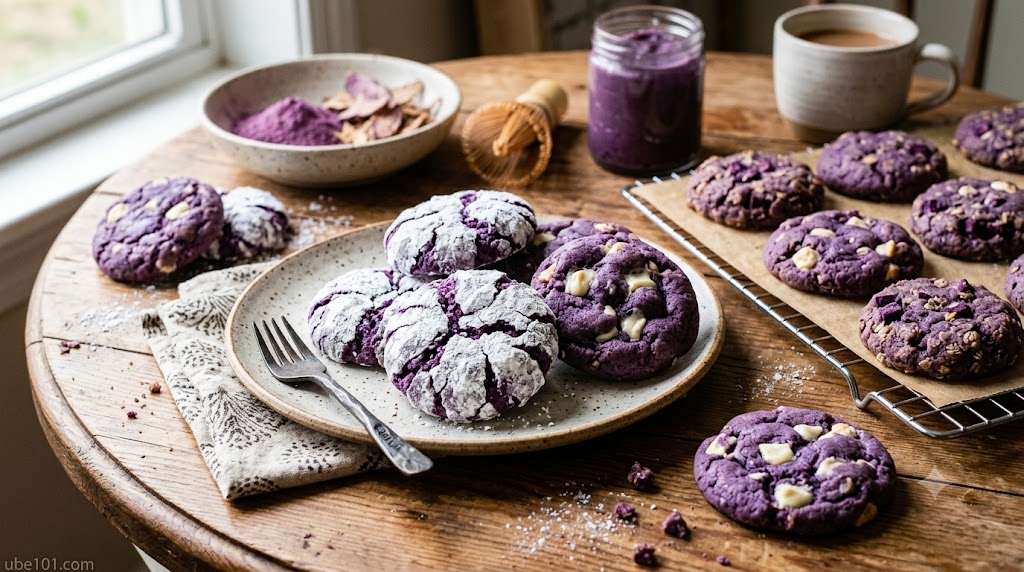
Ube cookies are cookies flavored and colored with ube, a purple yam (Dioscorea alata) that has been a staple dessert ingredient in the Philippines for generations. The cookies get their signature violet color and mildly sweet, earthy flavor from ube halaya (a cooked purple yam jam), ube extract, or ube powder. The flavor sits somewhere between vanilla, pistachio, and a faint hint of coconut, making ube cookies unlike any standard cookie flavor. They come in several forms: crinkle cookies with a soft, fudgy center; chewy drop cookies with white chocolate chips; marbled ube cookies that twist purple and vanilla doughs together; and even shortcut versions made from Trader Joe’s ube mochi mix.

Here at Ube 101, we focus on flavor and texture first. Ube cookies are not a novelty. They are a real, deeply rooted Filipino treat that happens to photograph well. This guide covers the best ube cookies recipe for each major style, explains the ingredient choices that actually matter, and points you toward the products and variations worth trying.

The Ube Ingredient That Makes or Breaks Your Cookies

Before you preheat the oven, you need to understand the three forms of ube used in baking. This is the part most recipes gloss over, and it is the single biggest factor in whether your ube cookies taste like purple yam or just look purple.

FormWhat it isBest for cookiesWatch out for
Ube halaya (jam)Cooked, mashed ube with sugar, milk, and butterAdding real ube flavor, moisture, and a fudgy textureSweetness and consistency vary by brand
Ube extract/flavoringA liquid color and flavor additiveBoosting purple color and aromaMany brands (including Butterfly and McCormick) use artificial “identical flavor” rather than real ube
Ube powderDehydrated, ground purple yamDry mixes, rehydrating into pasteNeeds to be rehydrated with milk or water, or it can taste chalky

The combination approach works best. Use ube halaya for body and real flavor, then add a small amount of ube extract to intensify the color. Experienced Filipino bakers like those at The Unlikely Baker and Cooking Therapy use both together rather than relying on either one alone.

Products worth trying (affiliate links):

McCormick Ube Flavor Extract on Amazon: McCormick Ube Flavor Extract 20ml

Butterfly Ube Flavoring Extract on Amazon: Butterfly Ube Flavoring Extract 2 oz

Sari Foods Ube Powder on Amazon: Sari Foods Co Natural Non-GMO Ube Purple Yam Powder

Best Ube Cookies Recipe: Classic Chewy Style

This recipe produces a soft, chewy ube cookie with white chocolate chips. It is the most beginner-friendly version and the one most people picture when they search for the best ube cookies recipe.

Freshly Baked Ube Cookies

What you need:

  • 2 1/4 cups all-purpose flour
  • 1/2 teaspoon baking soda
  • 1/2 teaspoon salt
  • 3/4 cup unsalted butter, softened
  • 3/4 cup granulated sugar
  • 1/4 cup brown sugar
  • 1 large egg plus 1 egg yolk
  • 1/3 cup ube halaya (jam)
  • 1 teaspoon ube extract
  • 1 cup white chocolate chips

How to make them:

Whisk flour, baking soda, and salt in a bowl. In a separate bowl, cream the butter with both sugars until light and fluffy (about 3 minutes with a hand mixer). Beat in the egg and egg yolk, then mix in the ube halaya and ube extract until the batter turns an even purple. Add the dry ingredients in two batches, mixing just until combined. Fold in the white chocolate chips. Chill the dough for at least 30 minutes.

Scoop rounded tablespoons of dough onto a parchment-lined baking sheet, spacing them 2 inches apart. Bake at 350°F (175°C) for 10 to 12 minutes. The edges should be set, but the centers should still look slightly underdone. They will firm up as they cool. Let them rest on the baking sheet for 5 minutes before transferring to a wire rack.

Halaya substitution note: If you cannot find ube halaya jam, you can substitute it with 2 tablespoons of dehydrated ube powder rehydrated with 3 tablespoons of hot water to form a thick paste.

The white chocolate ube cookies combination works because white chocolate’s buttery sweetness amplifies the vanilla and coconut notes already present in ube without competing with them. Milk or dark chocolate can overpower the subtle ube flavor, which is why most Filipino bakers default to white.

Crinkle Ube Cookies: The Filipino Bakery Classic

Crinkle ube cookies are the version you see most often in Filipino bakeries. They have a soft, almost fudgy interior with a dramatic cracked surface coated in powdered sugar. The contrast between the white sugar crust and the deep purple interior is what makes them so visually striking.

The technique that separates great crinkle cookies from mediocre ones is the double sugar roll. Roll each dough ball in granulated sugar first, then in powdered sugar. This prevents the powdered sugar from absorbing moisture from the dough and melting into it during baking. Jeanell Eats and Hummingbird High both recommend this method, and it is the reason bakery-style crinkles look clean and crackled while homemade versions sometimes come out with a dull, sticky surface.

Key differences from the chewy recipe above:

  • Replace butter with a mix of melted butter and vegetable oil for a denser, more fudgy texture
  • Use more ube halaya (1/2 cup instead of 1/3) for a deeper flavor
  • Increase sugar slightly to help create the signature cracks
  • Chill the dough for at least 2 hours (or overnight) so it is firm enough to roll into balls

Bake at 350°F for 10 to 11 minutes. The cookies will puff up and crack open during baking, revealing the purple interior through the white powdered sugar. Pull them out when they still look soft in the center. They continue cooking on the hot baking sheet for several minutes after you remove them from the oven.

Marbled Ube Cookies

Marbled ube cookies twist together two doughs: one vanilla and one ube. The visual effect is beautiful, and the flavor profile gives you both classic butter cookie and ube in every bite.

Constellation Inspiration popularized this style, and the technique is straightforward. Make a standard vanilla cookie dough and a separate ube cookie dough (using ube halaya and extract). Take a small portion of each, press them together, and twist or fold them gently before shaping into a ball. Do not overmix. The goal is visible streaks of purple and cream, not a uniform lavender.

Bake at 350°F for 10 to 12 minutes. The marbling pattern shows up best when the cookies are slightly underbaked and the two doughs maintain their separate colors.

Vegan Ube Cookies

Making vegan ube cookies is simpler than most people expect, because ube’s natural flavor and color do not depend on dairy or eggs.

Swap guide for vegan baking:

Standard ingredientVegan substituteNotes
ButterPlant-based butter sticks (Country Crock, Miyoko’s)Avoid tub-style margarine; it has too much water
Egg1 flax egg (1 tbsp ground flax + 3 tbsp water) per eggLet it sit 5 minutes to gel before using
White chocolate chipsDairy-free white chocolate chipsCheck labels carefully; many “white chips” contain milk
Sweetened condensed milk (for crinkles)Sweetened condensed coconut milkNature’s Charm brand works well

Carrots and Flowers and Hassle Free Vegan both offer tested vegan ube cookie recipes that rely on sweetened condensed coconut milk as a binder, which adds richness without eggs. The condensed coconut milk also enhances the natural coconut undertone that ube already carries, so the flavor pairing works even better than the non-vegan version in some cases.

Gluten Free Ube Cookies

For gluten free ube cookies, you have two good paths. The first is a straight flour swap: replace all-purpose flour with a 1:1 gluten-free baking flour blend (Bob’s Red Mill or King Arthur Measure for Measure both work). The cookies will be slightly more crumbly, so chill the dough longer (at least 1 hour) and add an extra egg yolk for binding.

The second path is mochi-style ube cookies, which are naturally gluten-free because they use glutinous rice flour (which contains no wheat gluten despite the name). These cookies have a chewy, slightly stretchy texture that is completely different from a standard cookie and closer to what you would find at a Japanese bakery. Mix glutinous rice flour with ube halaya, sugar, butter, and egg, then bake at 325°F for 12 to 15 minutes.

Trader Joe’s Ube Mochi Pancake and Waffle Mix has become one of the most popular shortcuts for making ube cookies at home. The mix already contains ube flavoring and glutinous rice flour, so you can turn it into cookies by adding butter (or coconut oil for a vegan version), an egg (or flax egg), and a splash of vanilla.

Modern Asian Baking developed a popular version of this recipe that produces soft, chewy mochi cookies with a pronounced ube flavor in about 25 minutes from start to finish. The cookies are dense, chewy, and naturally purple without needing any additional ube extract. They are also naturally dairy-free if you use coconut oil instead of butter, which makes Trader Joe’s ube cookies a practical option for vegan baking.

Keep in mind that Trader Joe’s ube products are seasonal. They typically appear on shelves in spring and summer and sell out quickly. If your store is out of stock, check back weekly during those months or ask an employee when the next shipment is expected.

How to Find Ube Cookies Near Me

If baking is not your thing, here is where to look for ube cookies near me:

Filipino bakeries are the most reliable source. Search Google Maps for “Filipino bakery” in your area. Most carry ube crinkle cookies year-round. In major cities like Los Angeles, New York, Chicago, and the San Francisco Bay Area, you will find multiple options.

Asian grocery store bakery sections sometimes stock ube cookies, especially chains like H Mart and 99 Ranch Market.

Specialty dessert shops in urban areas increasingly feature ube cookies. Sugarologie, The Dusky Kitchen, and Bites by Bianca are among the bakeries that have built strong followings around their ube cookie offerings.

Online ordering is an option if local sources are limited. Several Filipino bakeries ship ube cookies nationwide. Search Etsy or Instagram for “ube cookies” and filter by shipping availability.

Ube Cookies with Ube Powder: When Halaya Is Hard to Find

If you cannot find ube halaya at your local store, ube cookies with ube powder are a solid alternative. Rehydrate 3 tablespoons of ube powder with 3 tablespoons of warm whole milk, stir until smooth, and let it sit for 5 minutes. Use this paste in place of ube halaya in any recipe.

The texture will be slightly different (less moist and jammy), so compensate by adding an extra tablespoon of softened butter to the dough. The flavor will be a bit milder than halaya-based cookies, so adding 1/2 teaspoon of ube extract helps close the gap.

Sari Foods Co Natural Non-GMO Ube Purple Yam Powder is one of the more widely available options on Amazon: Sari Foods Ube Powder

Ube is not a passing trend. It is a root vegetable with centuries of culinary history in the Philippines, and its flavor profile (sweet, earthy, nutty, vanilla-adjacent) fills a gap that no other cookie ingredient covers. The global ube ice cream market alone was valued at approximately USD 1.24 billion in 2025 and is projected to grow at an 8.3% annual rate through 2034 (source: Growth Market Reports). That kind of growth does not happen around a novelty ingredient. It happens when the flavor genuinely resonates with people.

Nutritionally, ube (Dioscorea alata) provides about 140 calories per 100 grams when cooked, along with 3 to 4 grams of fiber, up to 40% of the daily value for vitamin C, and a meaningful dose of potassium and manganese (source: Healthline). Its deep purple color comes from anthocyanins, a class of antioxidants that research has linked to anti-inflammatory effects and blood sugar regulation (source: National Institutes of Health, PubMed Central).

Whether you start with a classic chewy batch, try your hand at Filipino-style crinkles, or take the Trader Joe’s shortcut, ube cookies are worth the experiment. And once you taste a real one (not just a purple sugar cookie), you will understand why they have moved from Manila bakeries to mainstream menus around the world.

For more on ube’s flavor and how it works in other desserts, check out our guide to what ube tastes like and our breakdown of ube crinkle cookies.

Frequently Asked Questions About Ube Cookies

What do ube cookies taste like? Ube cookies taste mildly sweet with earthy, nutty notes and a flavor often compared to vanilla and pistachio. The purple yam adds a warm, comforting quality that pairs well with white chocolate, coconut, and cream cheese.

Are ube cookies the same as taro cookies? No. Ube (Dioscorea alata) and taro (Colocasia esculenta) are completely different plants from different botanical families. Ube is sweeter and more intensely purple, while taro is starchier with a pale lavender color. Cookies labeled “taro” will taste noticeably different from real ube cookies.

Can I make ube cookies without ube halaya? Yes, but the flavor will be less authentic. You can substitute ube powder (rehydrated with a little milk) or use ube extract alone for color and a milder flavor. For the best results, combine ube extract with either halaya or rehydrated ube powder.

Where can I buy ube cookies near me? Check Filipino bakeries, Asian grocery stores, and specialty dessert shops in your area. Trader Joe’s carries seasonal ube products (typically spring and summer). You can also search Google Maps for “ube cookies near me” or “Filipino bakery near me” to find local options.

Are Trader Joe’s ube cookies vegan? Trader Joe’s Ube Mochi Pancake and Waffle Mix (which many people use to make cookies) is dairy-free and egg-free, making it suitable for most vegan diets. Always check the current label for the latest ingredient list, as formulations can change.

How do I get ube cookies to stay purple after baking? Use ube extract in addition to ube halaya. The extract provides a more stable purple color that holds up during baking. Avoid overbaking, since extended oven time can dull the color. Pulling cookies out when the centers still look slightly underdone helps preserve the purple hue.

What is the best flour for gluten free ube cookies? A 1:1 gluten-free baking flour (like Bob’s Red Mill or King Arthur Measure for Measure) works best as a direct swap. Rice flour or mochi flour (glutinous rice flour) also works well and adds a chewy texture that complements ube.

How long do ube cookies stay fresh? Stored in an airtight container at room temperature, ube cookies stay fresh for 3 to 5 days. For longer storage, refrigerate for up to 10 days or freeze for up to 3 months. Let frozen cookies thaw at room temperature for 15 to 20 minutes before eating.

Can I use ube powder instead of ube halaya in cookies? Yes. Rehydrate 2 to 3 tablespoons of ube powder with an equal amount of warm milk or water to form a paste, then use it in place of halaya. The texture will be slightly less moist, so you may want to add an extra tablespoon of butter or oil to compensate.

What goes well with ube cookies? White chocolate chips, macapuno (coconut sport), cream cheese filling, toasted coconut flakes, and vanilla ice cream all pair well with ube cookies. For drinks, try them with an ube latte, matcha, or a simple glass of cold milk.


SEO Metadata

  • Title tag: Ube Cookies: Best Recipes and Variations
  • Meta description: Discover the best ube cookies recipe with crinkle, vegan, and gluten-free variations. Real purple yam flavor, not just color.
  • URL slug: ube-cookies
  • Excerpt: Ube cookies blend the earthy, vanilla-like sweetness of Filipino purple yam with soft, chewy textures. This guide covers the best recipes, crinkle tips, vegan swaps, and where to find ube cookies near you.

References

  1. Healthline. “Purple Yam (Ube): Nutrition, Benefits, and Uses.” https://www.healthline.com/nutrition/purple-yam
  2. National Institutes of Health, PubMed Central. Research on anthocyanins in Dioscorea alata. https://pubmed.ncbi.nlm.nih.gov/
  3. Growth Market Reports. “Ube Ice Cream Market Size, Share & Trends.” https://growthmarketreports.com/
  4. Wikipedia. “Dioscorea alata.” https://en.wikipedia.org/wiki/Dioscorea_alata

Soalan Lazim

What do ube cookies taste like?

Ube cookies taste mildly sweet with earthy, nutty notes and a flavor often compared to vanilla and pistachio. The purple yam adds a warm, comforting quality that pairs well with white chocolate, coconut, and cream cheese.

Are ube cookies the same as taro cookies?

No. Ube (Dioscorea alata) and taro (Colocasia esculenta) are completely different plants from different botanical families. Ube is sweeter and more intensely purple, while taro is starchier with a pale lavender color. Cookies labeled 'taro' will taste noticeably different from real ube cookies.

Can I make ube cookies without ube halaya?

Yes, but the flavor will be less authentic. You can substitute ube powder (rehydrated with a little milk) or use ube extract alone for color and a milder flavor. For the best results, combine ube extract with either halaya or rehydrated ube powder.

Where can I buy ube cookies near me?

Check Filipino bakeries, Asian grocery stores, and specialty dessert shops in your area. Trader Joe's carries seasonal ube products (typically spring and summer). You can also search Google Maps for 'ube cookies near me' or 'Filipino bakery near me' to find local options.

Are Trader Joe's ube cookies vegan?

Trader Joe's Ube Mochi Pancake and Waffle Mix (which many people use to make cookies) is dairy-free and egg-free, making it suitable for most vegan diets. Always check the current label for the latest ingredient list, as formulations can change.

How do I get ube cookies to stay purple after baking?

Use ube extract in addition to ube halaya. The extract provides a more stable purple color that holds up during baking. Avoid overbaking, since extended oven time can dull the color. Pulling cookies out when the centers still look slightly underdone helps preserve the purple hue.

What is the best flour for gluten free ube cookies?

A 1:1 gluten-free baking flour (like Bob's Red Mill or King Arthur Measure for Measure) works best as a direct swap. Rice flour or mochi flour (glutinous rice flour) also works well and adds a chewy texture that complements ube.

How long do ube cookies stay fresh?

Stored in an airtight container at room temperature, ube cookies stay fresh for 3 to 5 days. For longer storage, refrigerate for up to 10 days or freeze for up to 3 months. Let frozen cookies thaw at room temperature for 15 to 20 minutes before eating.

Can I use ube powder instead of ube halaya in cookies?

Yes. Rehydrate 2 to 3 tablespoons of ube powder with an equal amount of warm milk or water to form a paste, then use it in place of halaya. The texture will be slightly less moist, so you may want to add an extra tablespoon of butter or oil to compensate.

What goes well with ube cookies?

White chocolate chips, macapuno (coconut sport), cream cheese filling, toasted coconut flakes, and vanilla ice cream all pair well with ube cookies. For drinks, try them with an ube latte, matcha, or a simple glass of cold milk.